What You Pay
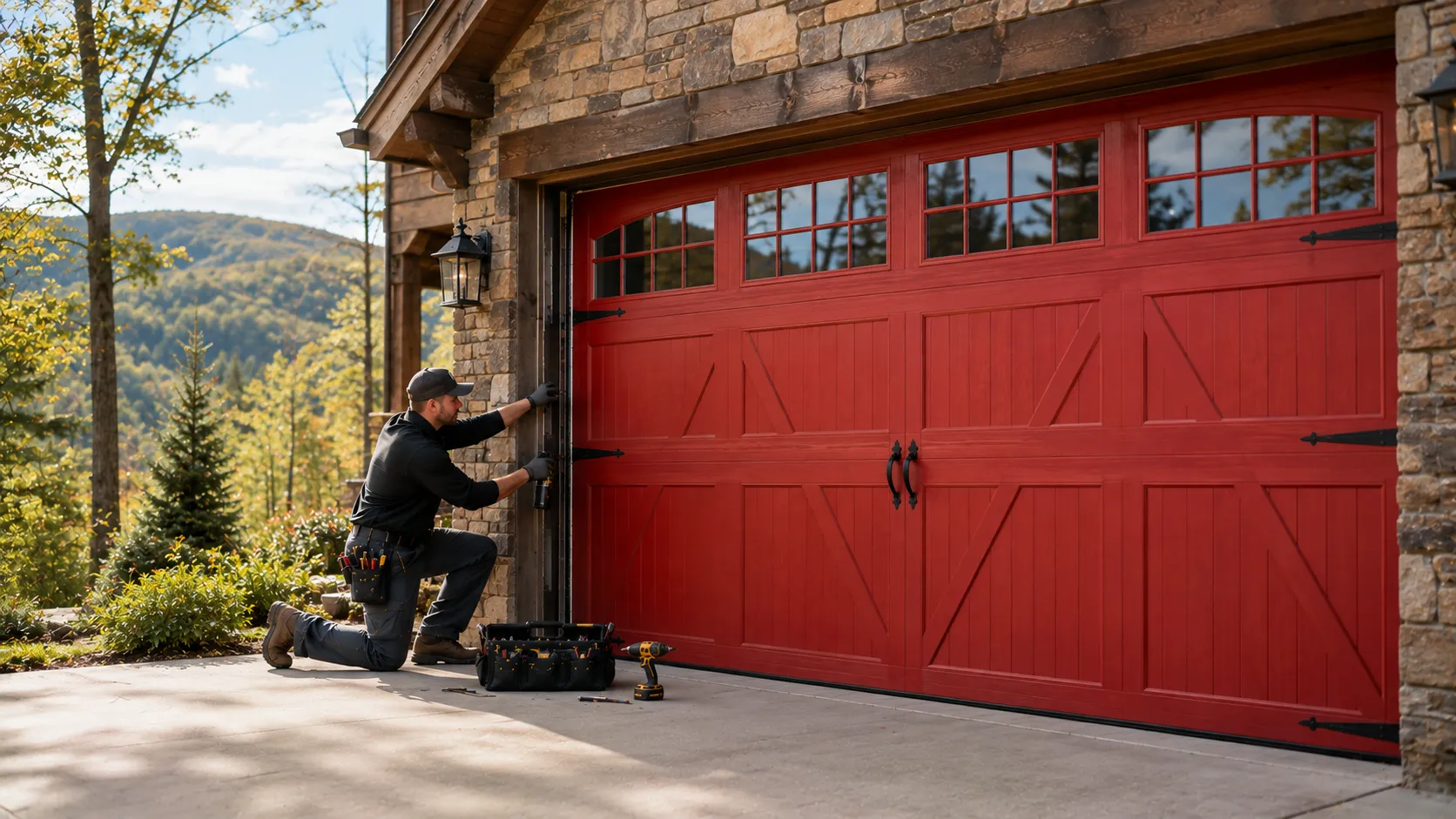
We won't quote a number here without seeing the door, the opening, and what's behind the wall - a single door on a garage built in 1975 and a double door on a garage from 2000 don't cost the same to do right. What we can tell you is what moves the number: door size, insulation, whether the track and header need rework, and whether the opener gets replaced with the door or stays. Fort Lauderdale's median household income sits around $62,201, and most jobs we price land where that budget can plan for them without financing games. If your opening is out of square or the header was framed for a lighter door decades ago, that's extra labor before the new door goes in, and we'll show you that on the estimate, not bury it. The honest limitation: we don't do phone quotes for installation. Anyone who gives you a firm number without walking the garage is guessing, and a guess on a job this size usually turns into a change order later. A short visit gets you a real number and a door that actually fits the opening you have.
Why This Fails Locally
A lot of Fort Lauderdale's housing stock went up between 1953 and 2005, with the bulk of it dating to the 1960s and 70s across the named areas in this part of the county. Doors and openers from that era were sized and hung for lighter panel materials than what's standard now, and plenty of garages still carry the original frame and track even after a door swap somewhere along the way. That mismatch is why a 'new' door sometimes still binds or drags - it went onto old hardware instead of a rebuilt opening. The mild temperate climate here doesn't put the stock through freeze-thaw cycling the way northern housing gets, so panels don't crack from ice the way they do elsewhere. But it also means a lot of these original doors have simply outlasted their spring cycle count without ever giving an obvious weather-driven reason to replace them, so owners keep repairing instead of installing new. By the time a spring or cable finally lets go on a door that old, the track and rollers are usually just as worn, and patching one part without the rest is a short-term fix.
How It Shows Up
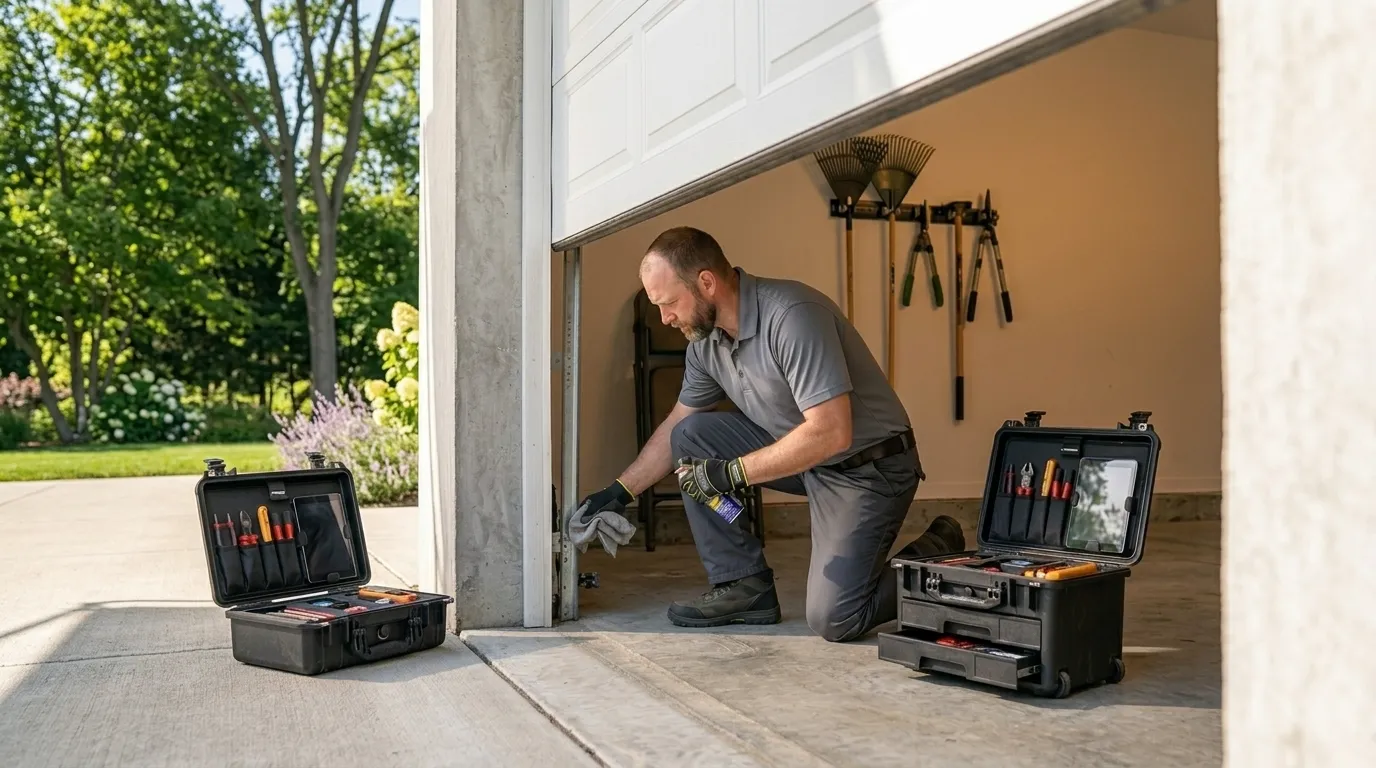
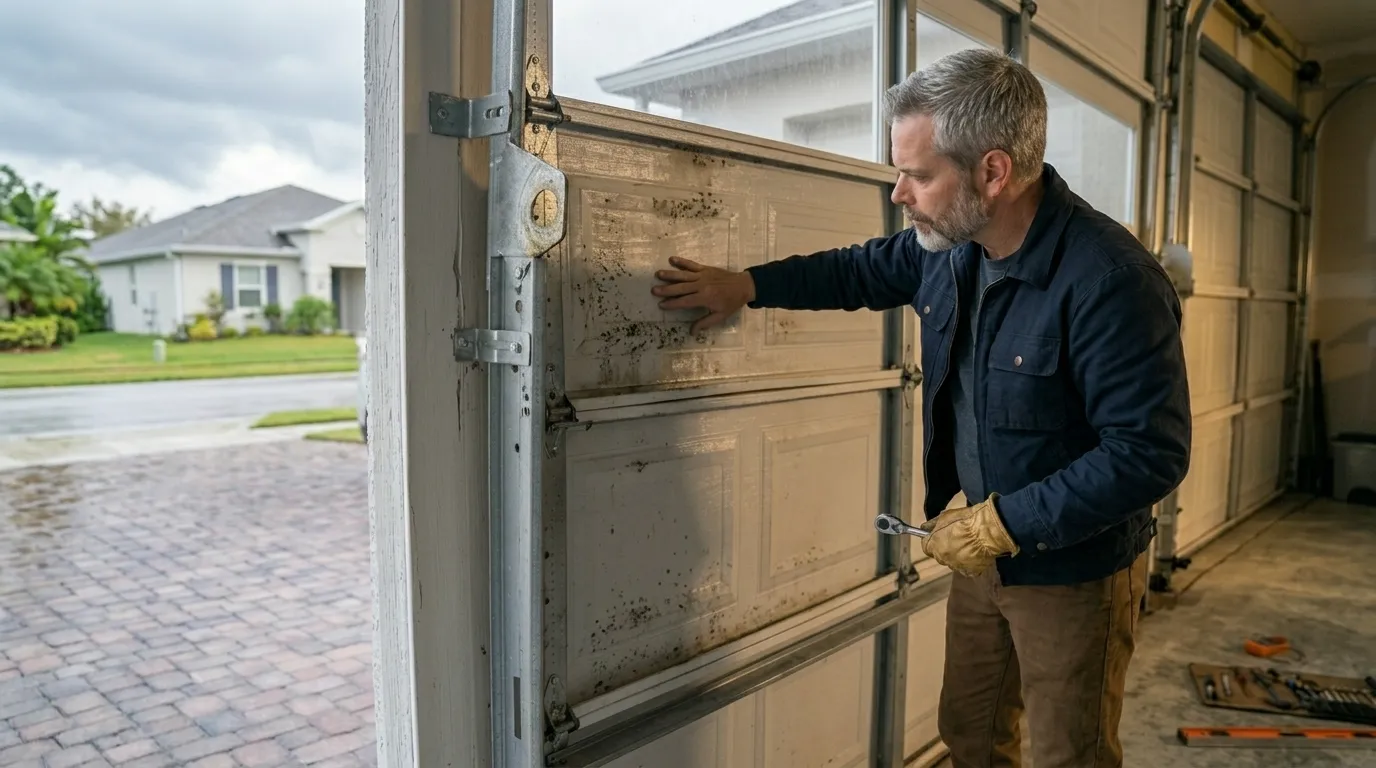
Most calls start the same way: the door's noisy going up, it's heavier to lift by hand than it used to be, or the opener strains and reverses partway through the cycle. On the older stock around here - a lot of it dating back to the 1953-2005 build range - that's usually the door itself reaching the end of its run, not just a spring or a sensor. Owners near Victoria Park a mile southeast or Wilton Manors a mile north tell us the same thing: the door still closes, technically, but it's clearly working harder than it should. Sometimes it's cosmetic first - dents, a panel that doesn't sit flush, weatherstripping that's given out - and the mechanical trouble catches up a few months later. With roughly 107,368 owner-occupied houses across this service area, we see the same pattern repeat block to block: houses built in the same decade tend to hit the same failure points around the same time. If your neighbor's door started acting up last year, yours running fine now doesn't mean much.