What to Check
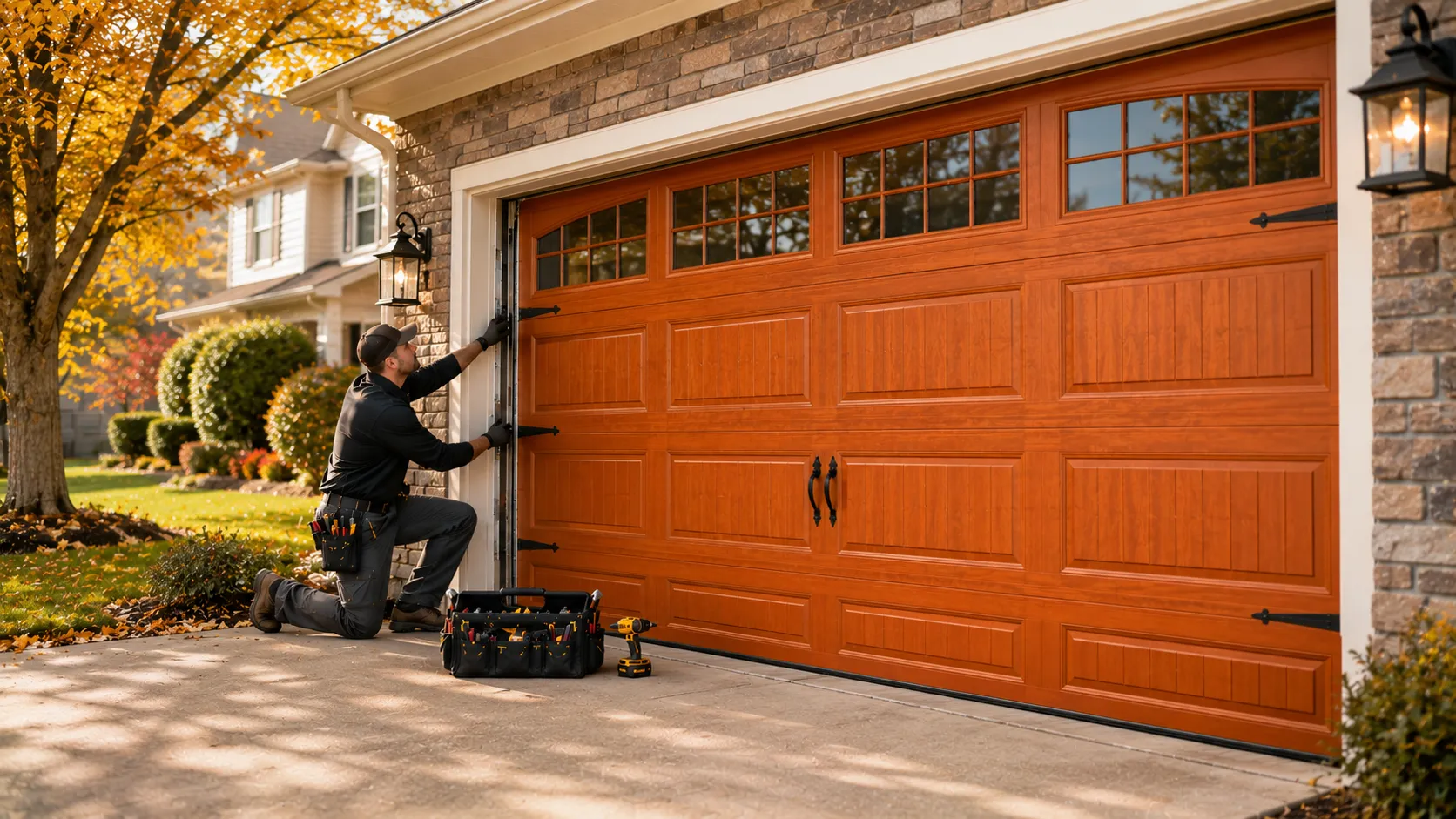
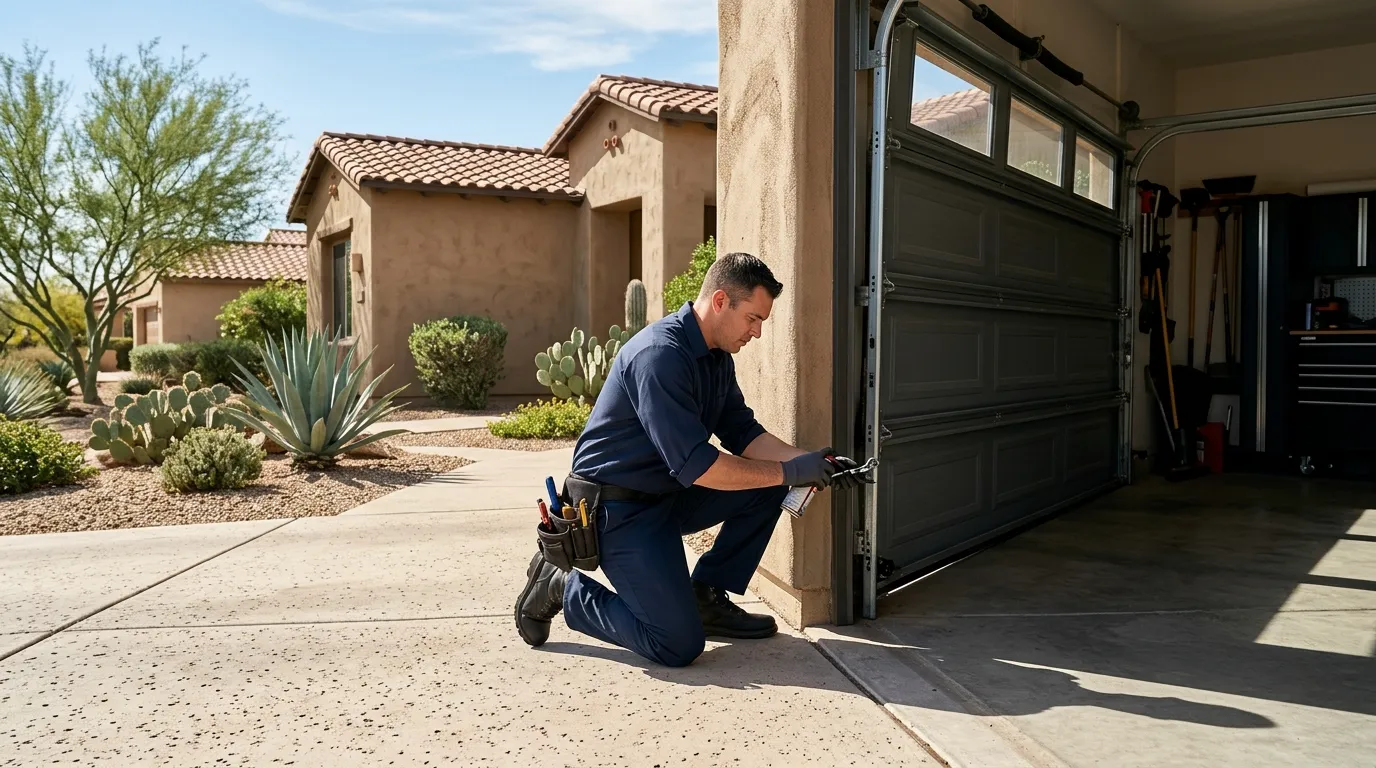
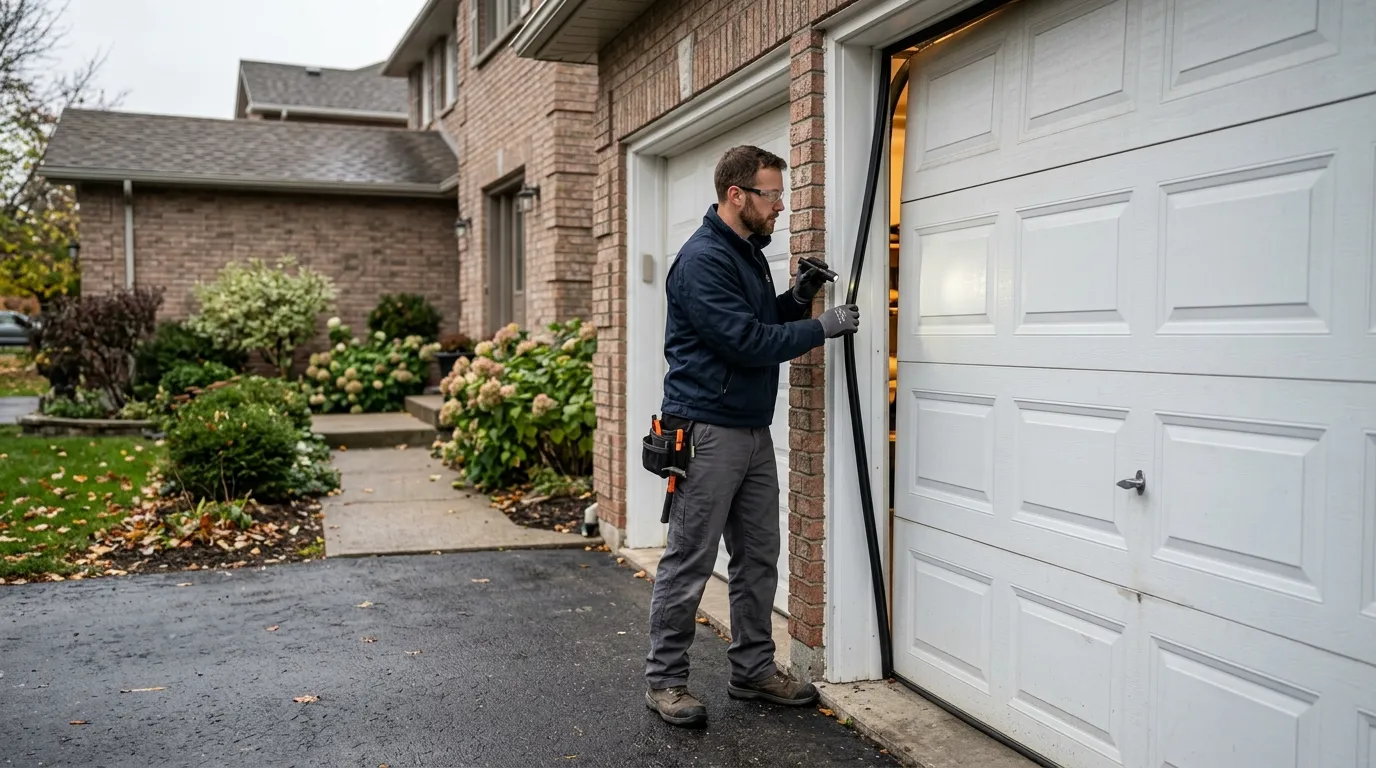
Start at the rollers. On a lot of Fort Lauderdale homes built in that 1953-2005 window, the original steel rollers are still in the track, and after decades of use they wear down unevenly, especially the bottom roller that takes the brunt of the door's weight every open and close. Look for a roller that's flattened on one side or a bracket that's bent outward at the point where the horizontal track meets the vertical.
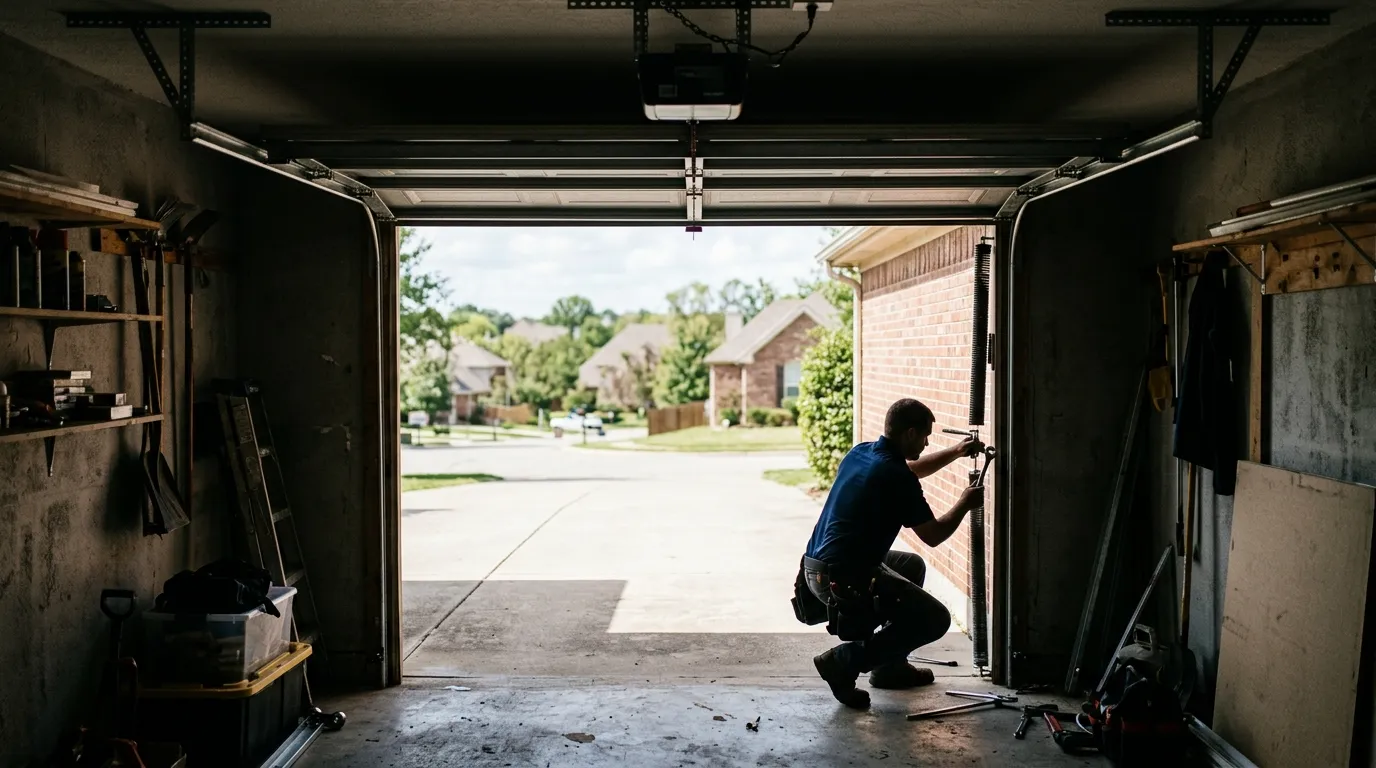
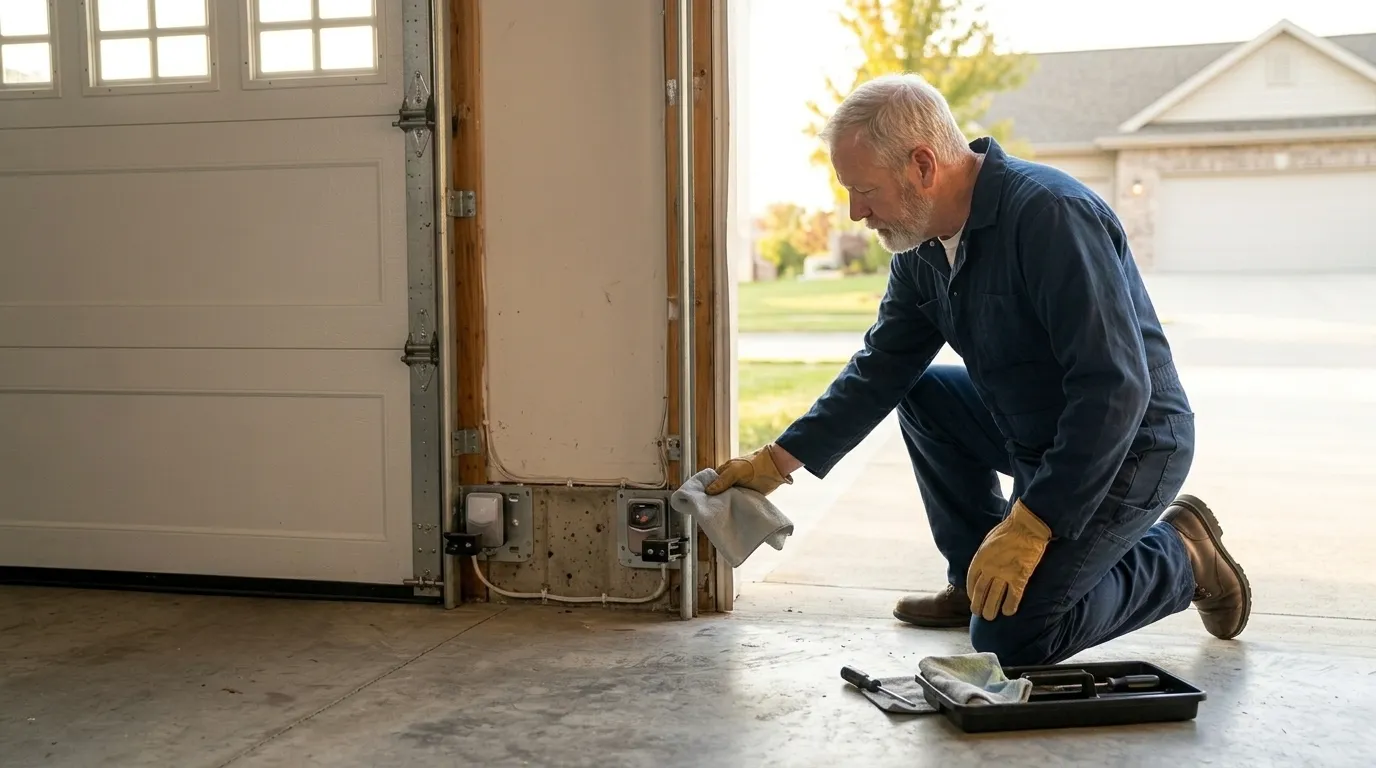
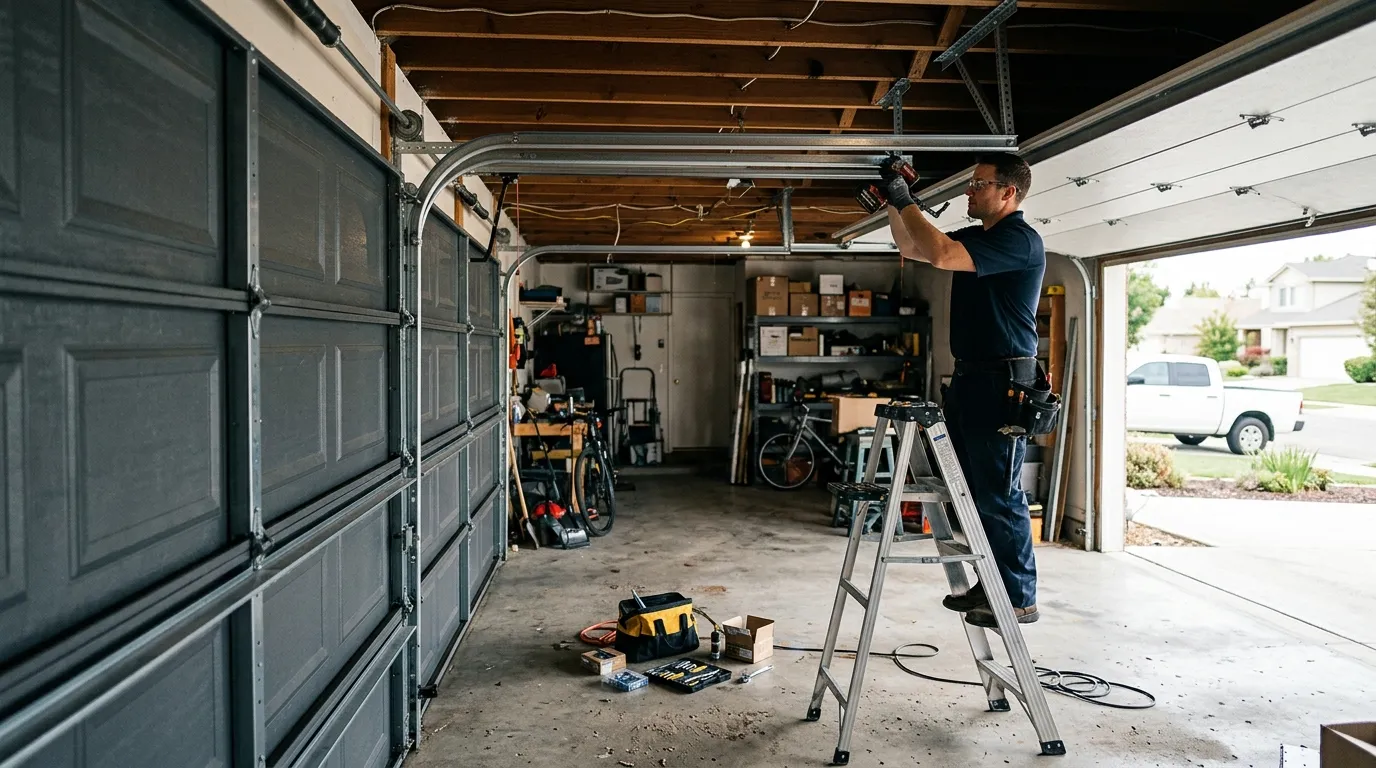
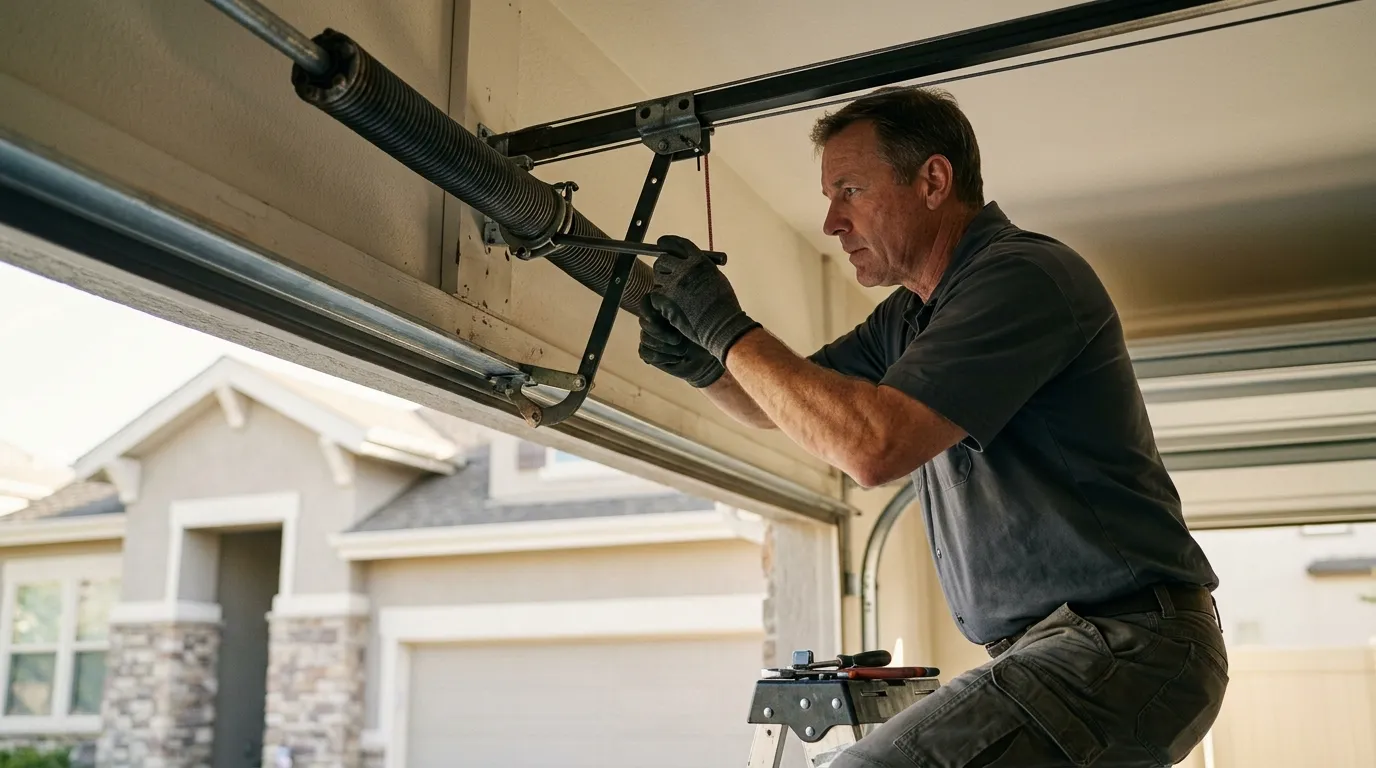
Next, check the track itself for a gap between the track and the wall bracket. If the bracket screws have backed out of the jamb, the whole track can flex sideways under load and let a roller pop free on the next cycle. This is common in houses from the 1960s-70s stock that makes up most of the older sections here, where the original wood framing has had a long time to move.
Finally, look at the bottom corners of the door itself. A panel that's been struck by a car bumper or a cart will bend just enough to throw the whole roller alignment off, even if the dent looks minor from a distance. None of this requires tools to check, just a flashlight and five minutes before you decide whether it's a DIY fix or a call.
What Local Conditions Do
Fort Lauderdale sits in a mild temperate band, which sounds like it should be easy on hardware, and mostly it is. There's no freeze-thaw cycle here breaking down concrete anchors the way it does further north. But mild and humid still means the wood jambs in older homes swell and contract with the seasons, just less dramatically. Over enough years, that slow movement loosens the screws holding track brackets to the frame, and a track that's off by even an eighth of an inch at the top can walk a roller out of the channel lower down.
Houses built in the 1953-1975 range, which covers a lot of what's on the ground across the area's 32 named neighborhoods, were framed to codes and habits from that era. Track hardware wasn't always through-bolted into studs; sometimes it's screwed into jamb trim that's thinner than what gets used today. That's not a defect, it's just what was standard, and it's part of why an older door needs its brackets checked more often than a newer one would.
The Problem
A garage door doesn't jump the track for one reason. It's usually a small misalignment that's been building for months, sometimes years, until the door finally binds hard enough on one side that a roller pops free entirely. In Fort Lauderdale, the two most common contributors we see are worn original hardware in houses from that 1953-2005 build era, and bracket screws that have loosened as the wood framing behind them has moved with the humidity.
We don't stock parts for every obsolete track profile from the 1960s and 70s, and honestly, for some of those older systems, matching the exact original hardware isn't worth the time it takes to track down. In those cases, replacing the track and rollers as a set gets you a door that runs true again without hunting for a part nobody makes anymore. It's not the answer for every job, but it's the honest one for a lot of the older doors we look at.