What to Check
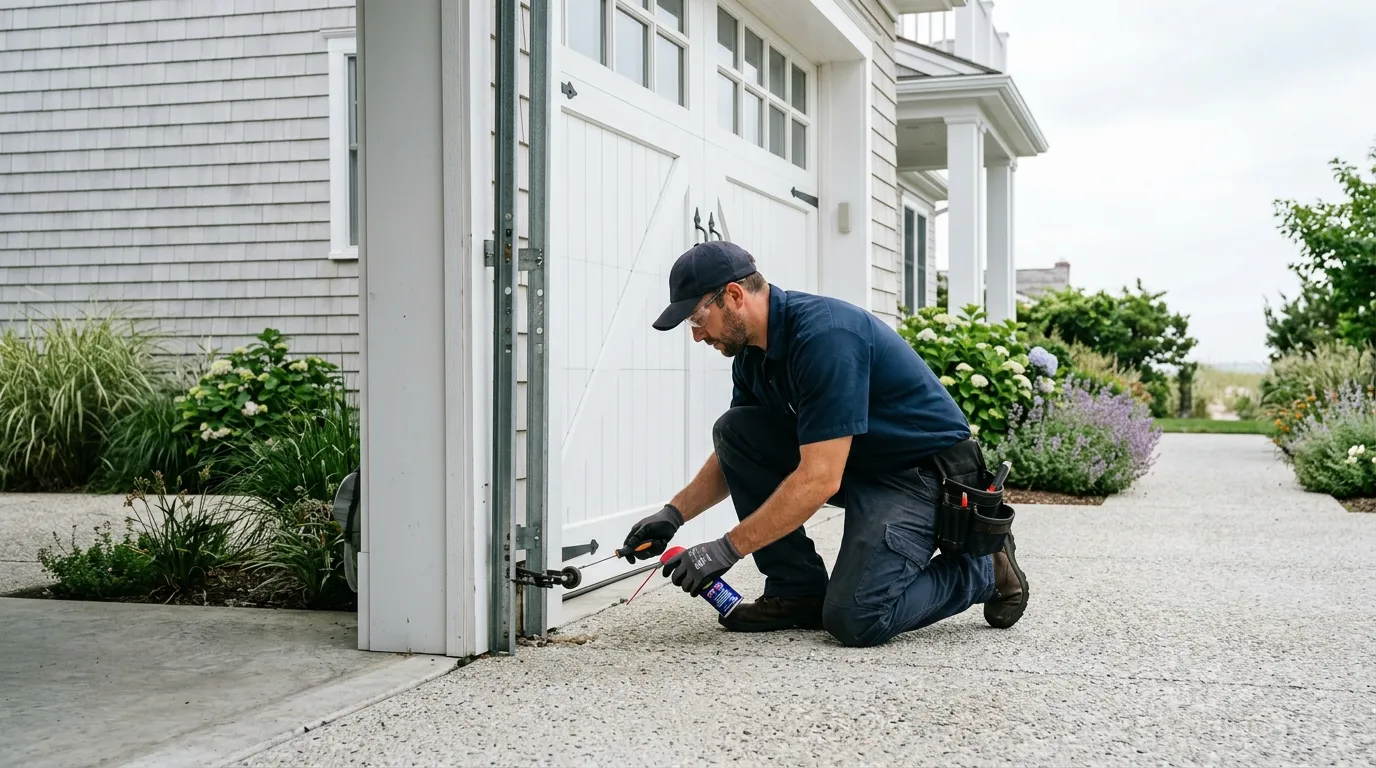
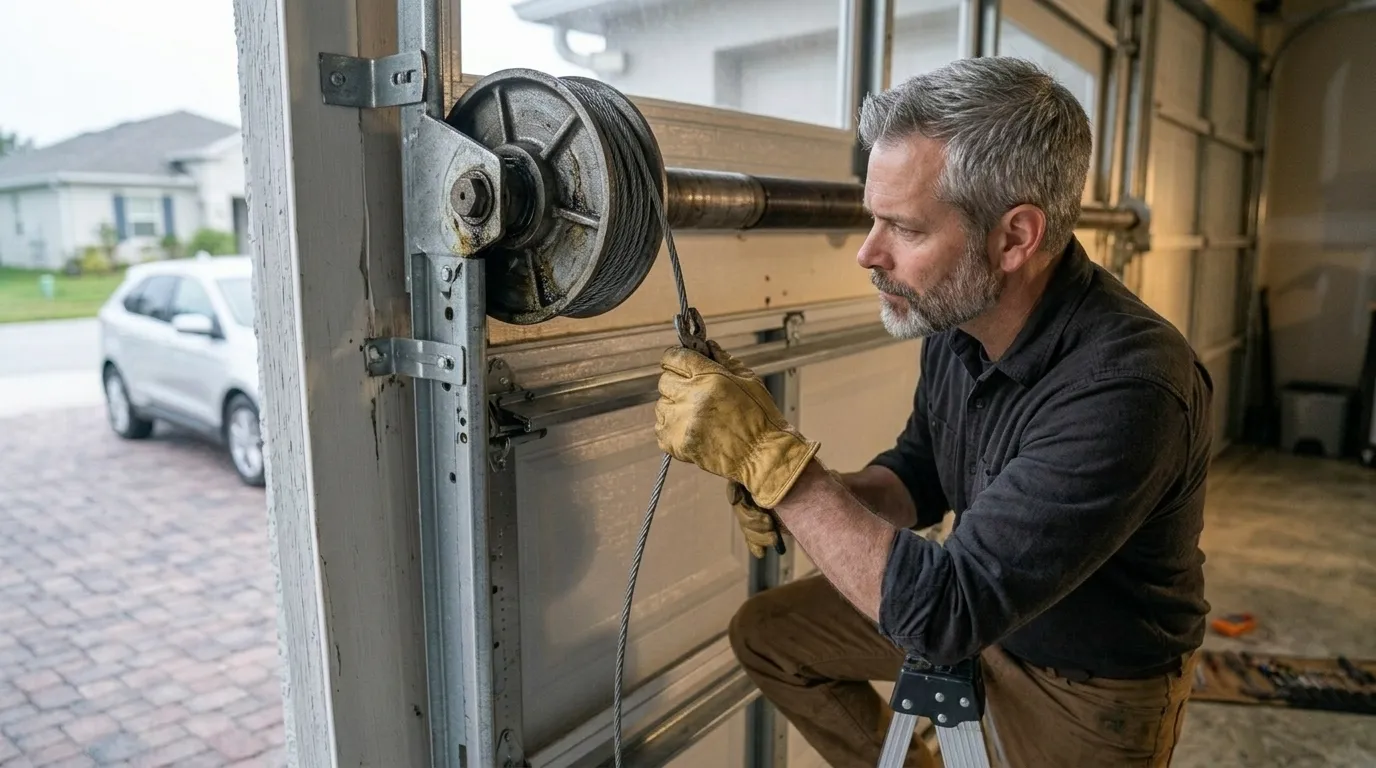
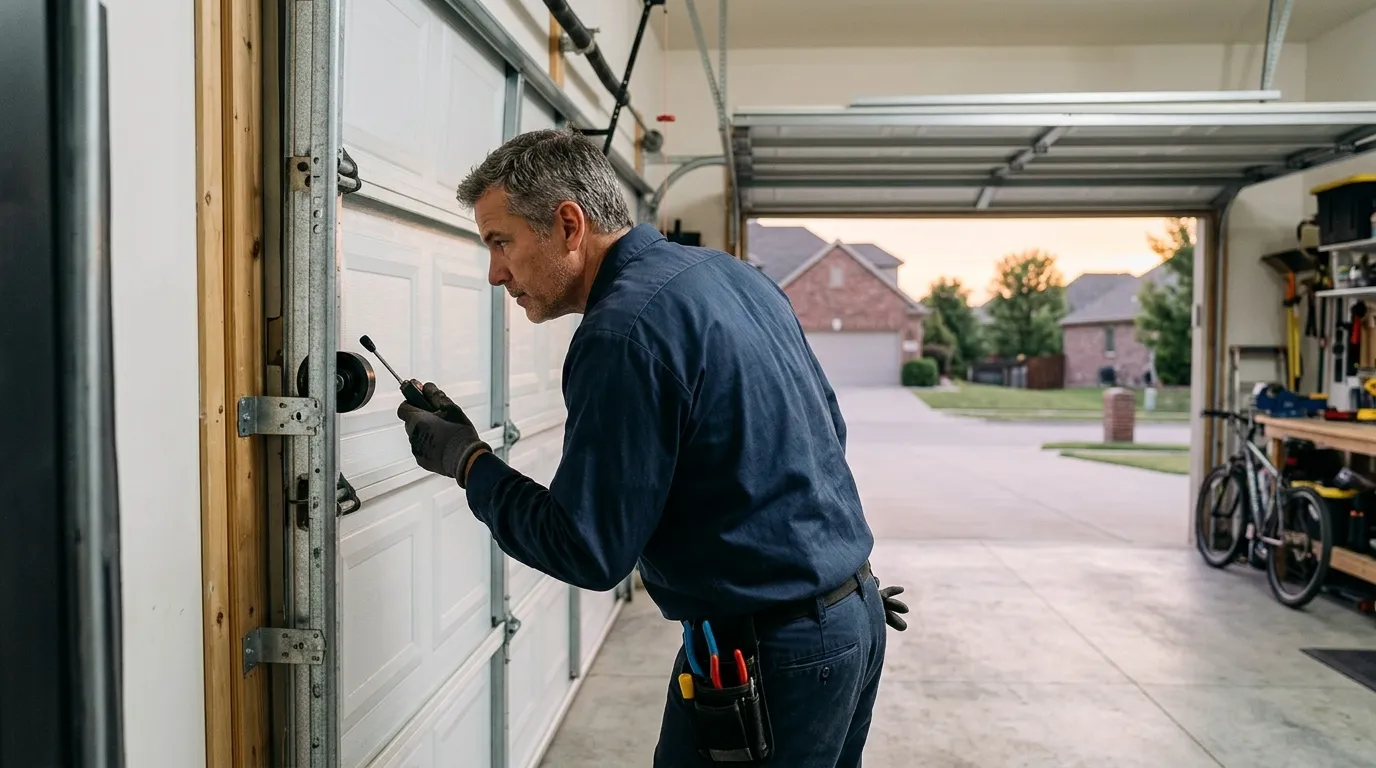
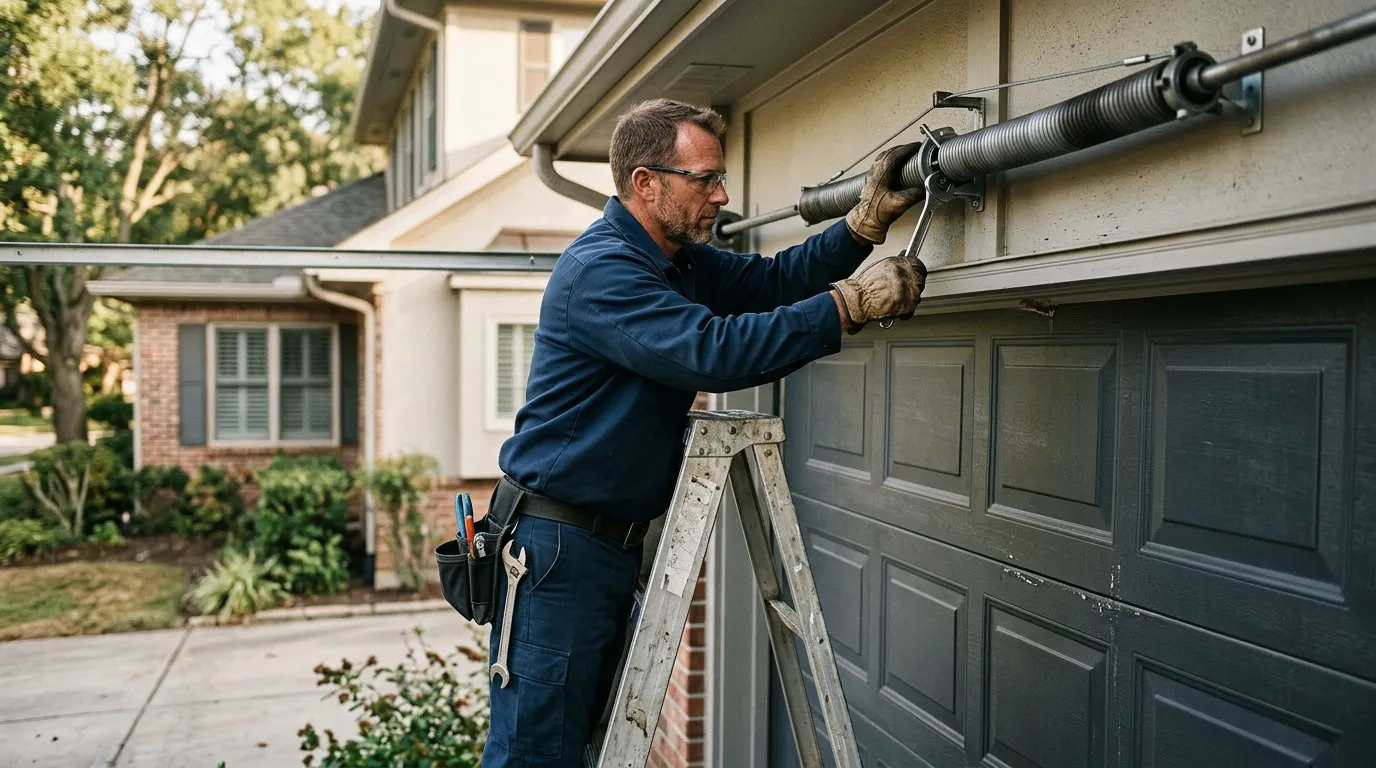
Start with where the sound happens in the cycle. A grinding noise as the door starts to lift usually points to the rollers, not the opener - worn nylon rollers rattling in a track that's slightly out of alignment. A loud bang followed by the door refusing to move is almost always a broken torsion spring, and on the older doors common across Fort Lauderdale that spring may still be the single-spring setup builders used before dual-spring systems became standard. Listen for a rhythmic click as the door travels: that's often a bent track section, common on doors that have taken a bump over the decades. A high-pitched squeal that comes and goes with humidity, rather than with use, points to dry hardware rather than a worn part. Fort Lauderdale's housing stock runs from 1953 through 2005, with a median build year of 1975, so a huge share of the doors we look at are original installs on original tracks, never re-tensioned, never re-lubricated. Check the cables at the bottom bracket too - fraying there on a door this age is common and it's not a sound issue until it snaps. None of this replaces a hands-on look, but knowing which noise you're hearing tells you whether to grab a can of lubricant or make a call.
What Local Conditions Do
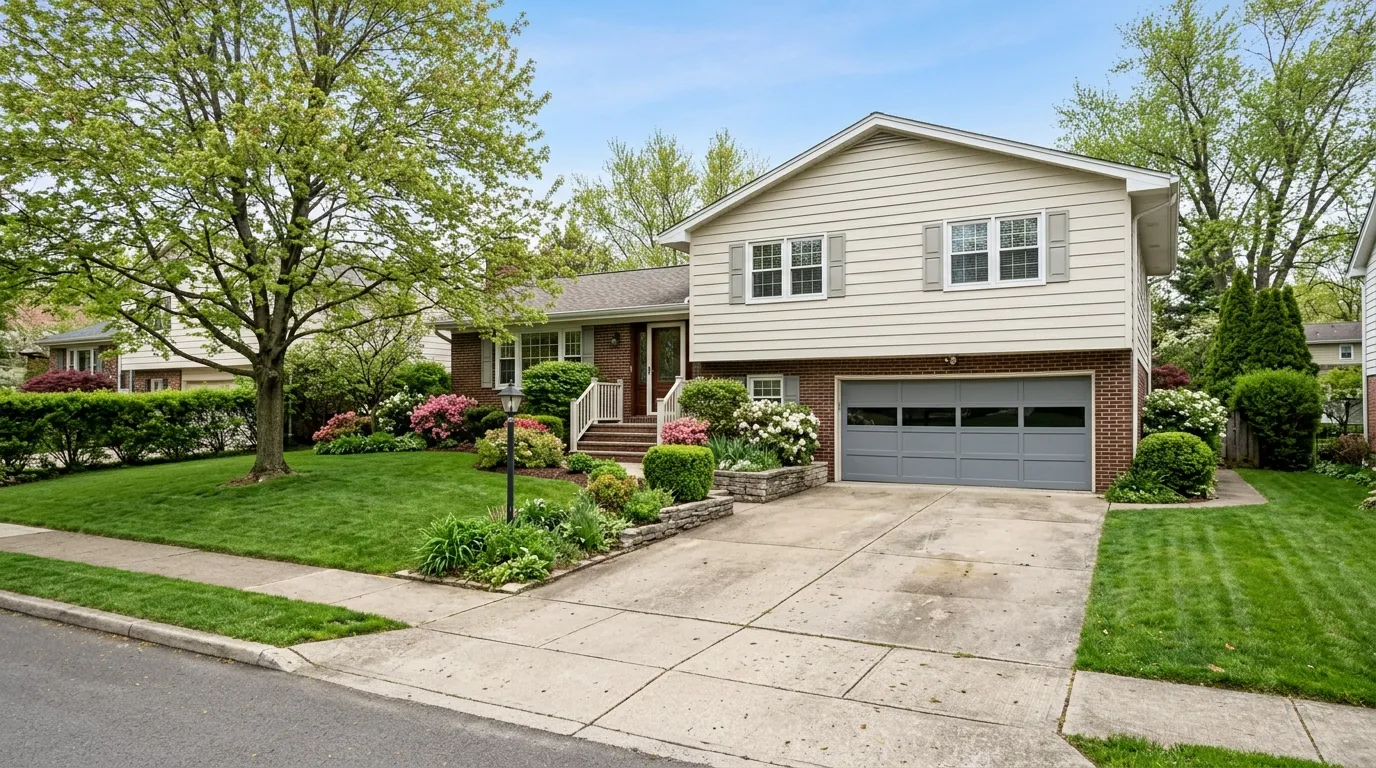
Fort Lauderdale sits in a mild temperate band, which sounds like it should be easy on hardware, and in some ways it is - no hard freeze-thaw cycle cracking bolts loose the way it does further north. But mild doesn't mean static. Humidity here still moves through daily swings, and that moisture works into unsealed bearings and springs the same way temperature swings do elsewhere, just on a slower, quieter timeline. On a house built in the 1960s or '70s - which describes most of the stock across the 32 named areas that make up greater Fort Lauderdale - that means decades of moisture cycling through hardware nobody has serviced. Steel springs lose lubricant to humidity, coils start to bind, and you get a sound before you get a failure. Rollers dry out and start squealing weeks or months before they actually crack. The practical upshot: in this climate, noise is usually an earlier warning than it would be in a drier one, which is good news if you catch it, because there's more runway between first squeal and total failure than homeowners assume.
The Problem
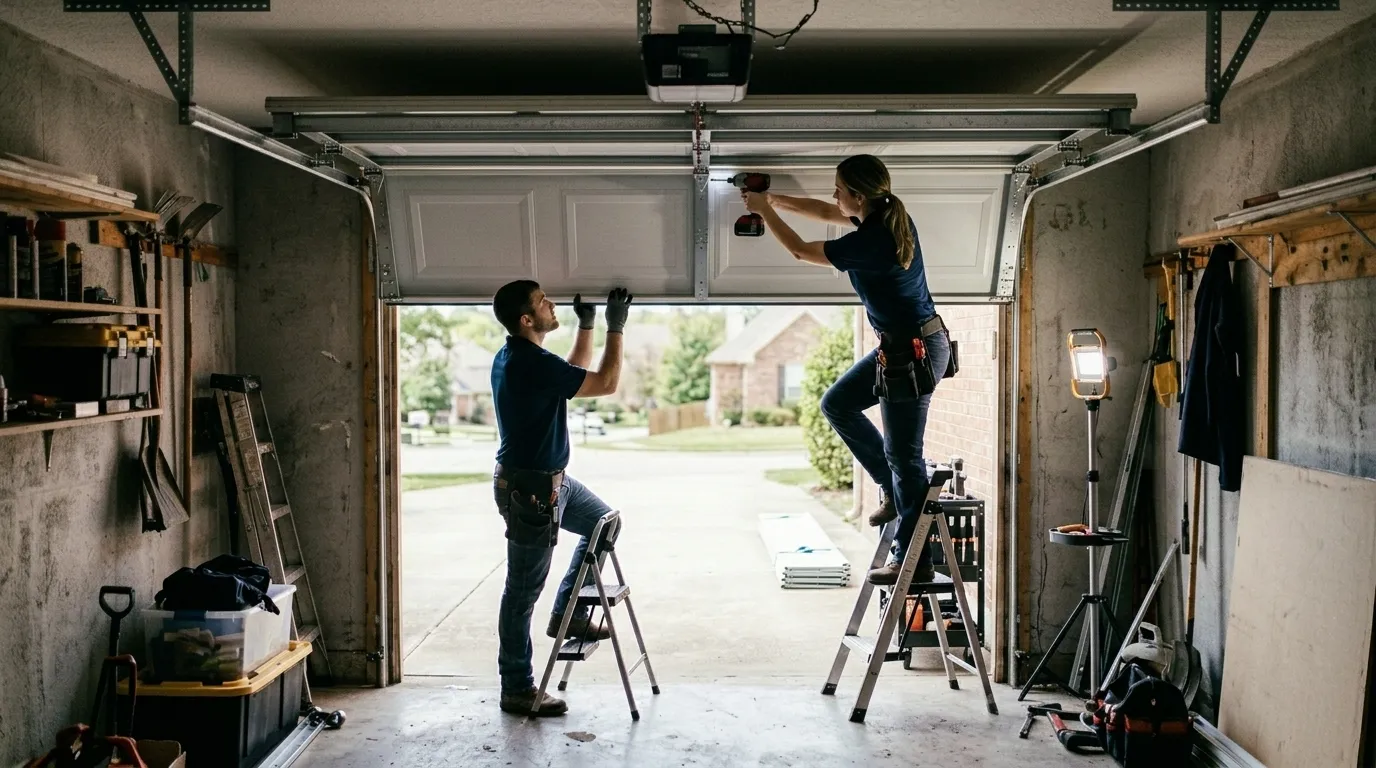
Here's the honest limitation: a noise alone doesn't tell you the fix, and we can't diagnose one accurately over the phone. Two doors making what sounds like the same squeal can have completely different causes - one a dry hinge, one a spring about to go - and guessing wrong means either an unnecessary part swap or a missed warning. What we can tell you is that on housing this age, from Lauderdale Manors a mile northwest of downtown to Edgewood four miles south, the hardware era repeats block to block, so the failure patterns repeat too. The other honest part: if your door and opener are both original to a house built decades ago, sometimes the fix that makes sense isn't quieting the noise, it's replacing the door before the next part fails. We'll tell you when that's the math instead of running up a repair bill on hardware past its working life.