What to Check
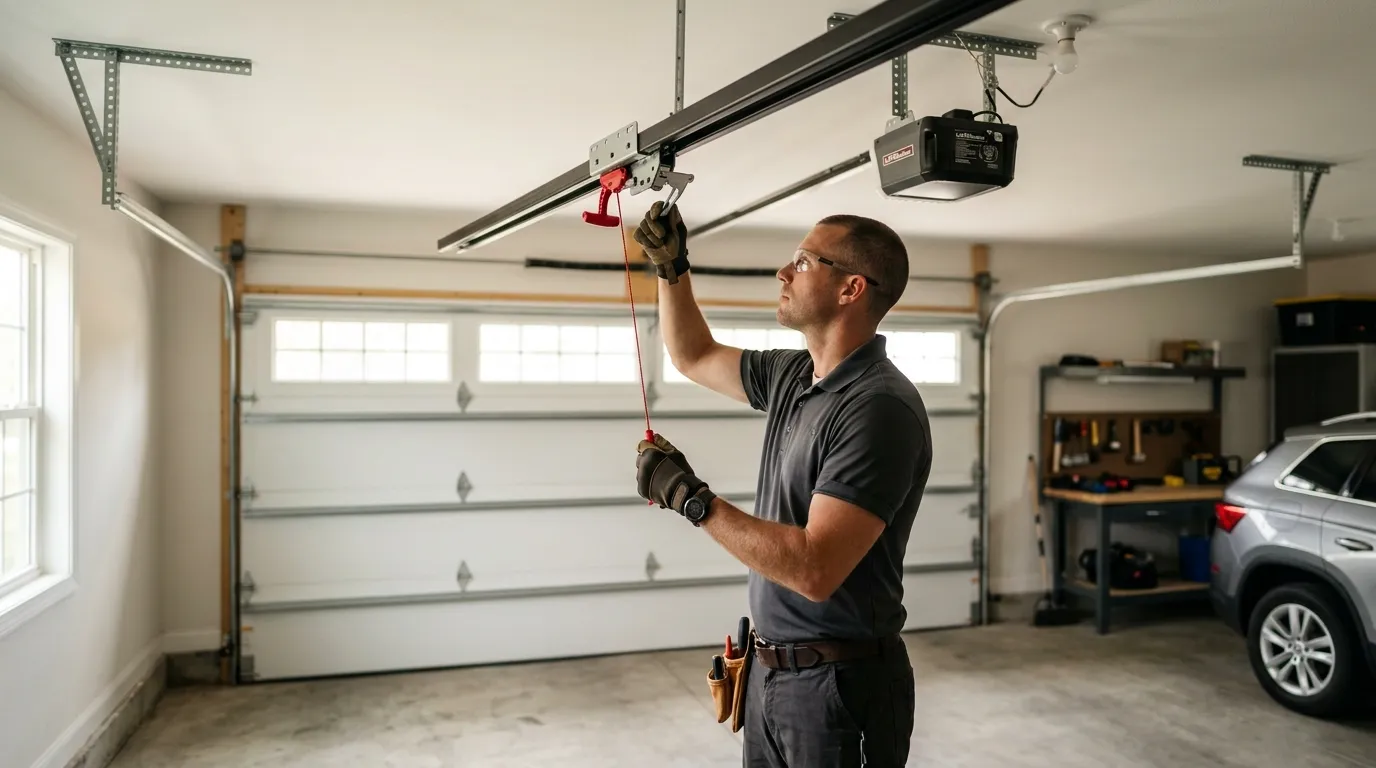
Start with the manual release. Every opener has a red pull cord hanging from the trolley, and if you've never used it, now's the time to find it before you're standing in the dark trying to get a car out. Pull it, and the door should move by hand. If it doesn't move freely, that's a spring or track problem, not an opener problem, and it's worth knowing the difference before a repair call.
Next, check whether the unit has battery backup. A lot of homes in Fort Lauderdale, Wilton Manors, and Victoria Park still run openers installed decades ago, long before battery backup was standard equipment, so a power cut just stops the door where it sits. No backup, no override except the manual release.
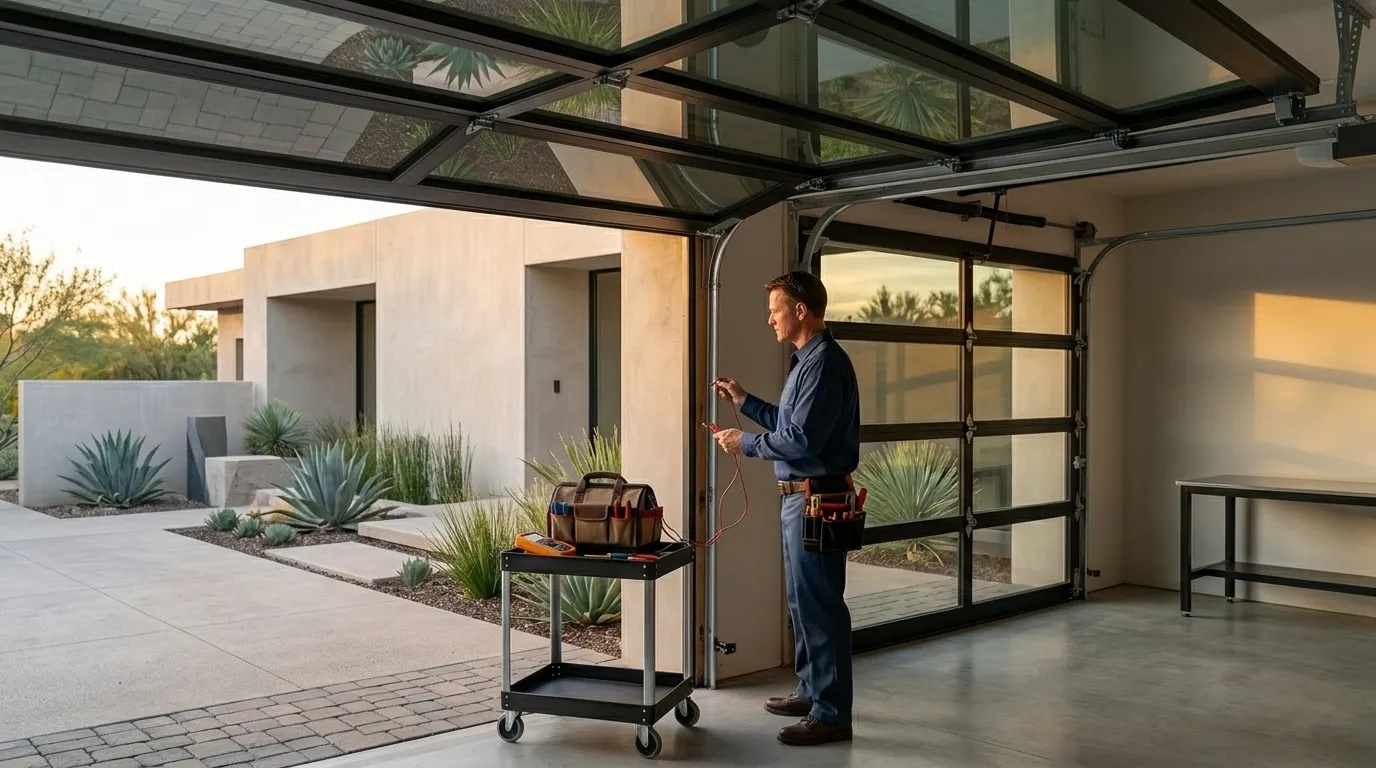
Last, check the wall control wiring at the unit itself. Loose low-voltage wire is common in houses with add-on garages or converted carports, and it can look exactly like a dead opener after an outage even when the motor's fine. A five-minute check here saves a wasted service call.
What Local Conditions Do
Fort Lauderdale sits in a mild temperate band, so openers here aren't fighting the freeze-thaw cycles that crack gears and stiffen grease up north. That's the good news. The catch is that most of the housing stock across this service area went up between 1953 and 2005, with the bulk from the 1960s and 70s, and openers from that era were built for a house, not for a grid that occasionally drops out.
A lot of those original units are chain-drive with a simple relay board, no surge protection built in, and no battery backup to ride out a cut. When power comes back after an outage, some of these older boards don't reset cleanly. The motor hums, the light blinks, but the door won't cycle. That's not damage from the outage itself so much as an old board finally showing its age. In neighborhoods like Lauderdale Manors and Washington Park, a mile or two out from downtown, we still find these original units in place.
The Problem
The real issue isn't the power cut itself. It's what the outage exposes in an opener that was already near the end of its working life. Across this service area, with 107,368 owner-occupied houses and a median household income of $62,201, a lot of owners are weighing a repair against a full opener swap right when a cut happens to knock an old board out.
Here's the honest limitation: we don't stock control boards for every discontinued opener model that shows up in houses built in the 1960s and 70s. Some of those parts simply aren't made anymore. If your unit is one of them, replacement is usually the faster and cheaper path once you count the hours spent hunting a part that may not exist. We'll tell you straight if that's where you stand instead of quoting a repair that won't hold.