What Is on the Truck
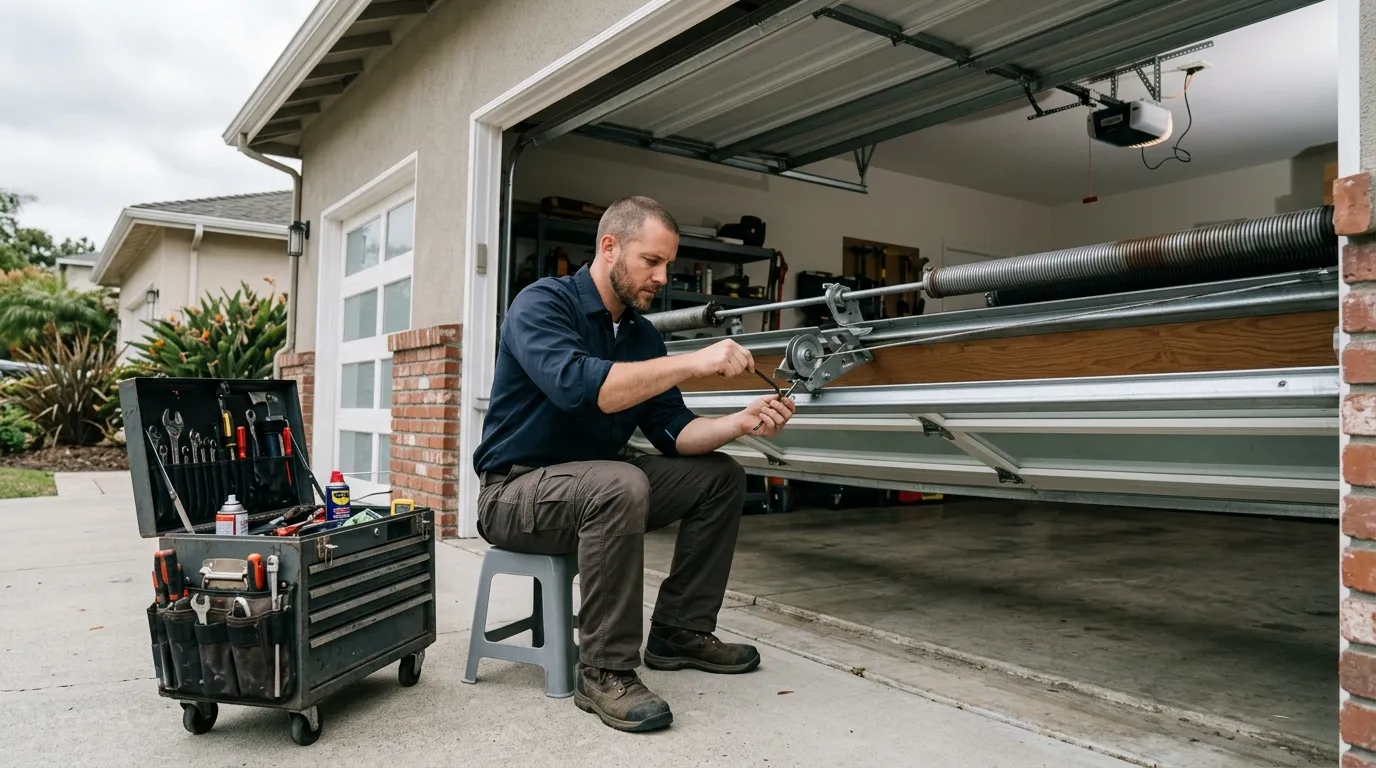
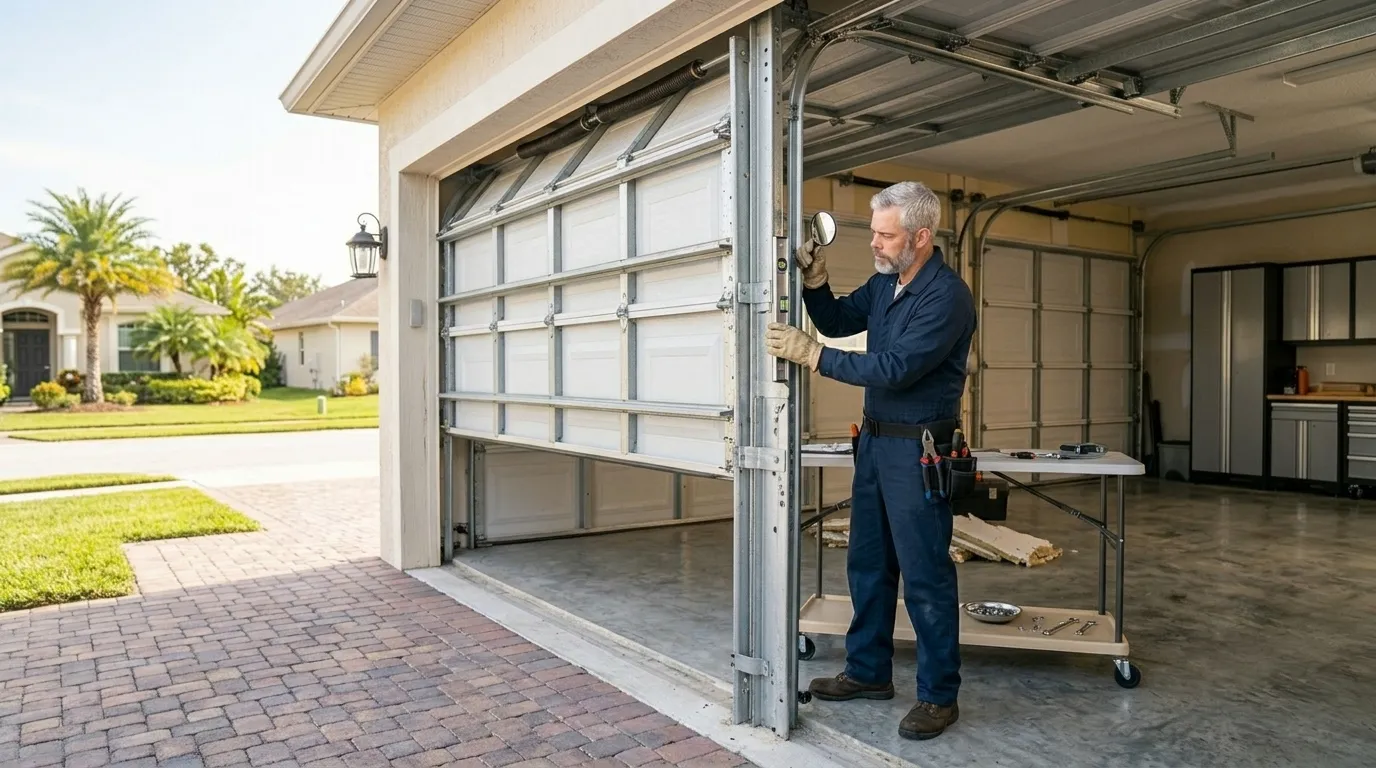
Most houses in this part of the county went up around 1977, and that's the number that decides what spring goes on the door before anyone even looks at the fault. A door from that build era in Deerfield Beach is almost always a two-car steel sectional, 16 feet wide by 7 feet tall, hung on torsion hardware rather than the older extension-spring setups you'd find on a narrower single door from an earlier decade. That means the truck carries torsion springs in a handful of wire gauges and wind lengths sized for that door weight, plus the shafts, cable drums, and end bearing plates that wear alongside them. We don't guess the wind - we measure the old spring or the door's drop test and match it. If a door here has been swapped out for a lighter insulated panel at some point, the spring size changes with it, so the truck stocks a range rather than one fixed size.
We don't carry every spring length in existence. Oddball residential lifts, older commercial-grade coils, and a few imported hardware sets take a special order, and we'll say so on-site rather than force a mismatched spring onto your shaft.
How It Shows Up
The climate along this stretch of coast is mild and temperate, so the springs here don't rust through the way they do in wetter, colder regions - the failure mode is closer to cycle fatigue and sun-brittled cable coating than corrosion eating the coil. A torsion spring on a door that's been opening and closing for four decades simply reaches the end of its wind count. It usually announces itself one of two ways: a loud bang from the garage, sometimes mistaken for a car backfiring, or a door that suddenly feels twice as heavy when you try to lift it by hand.
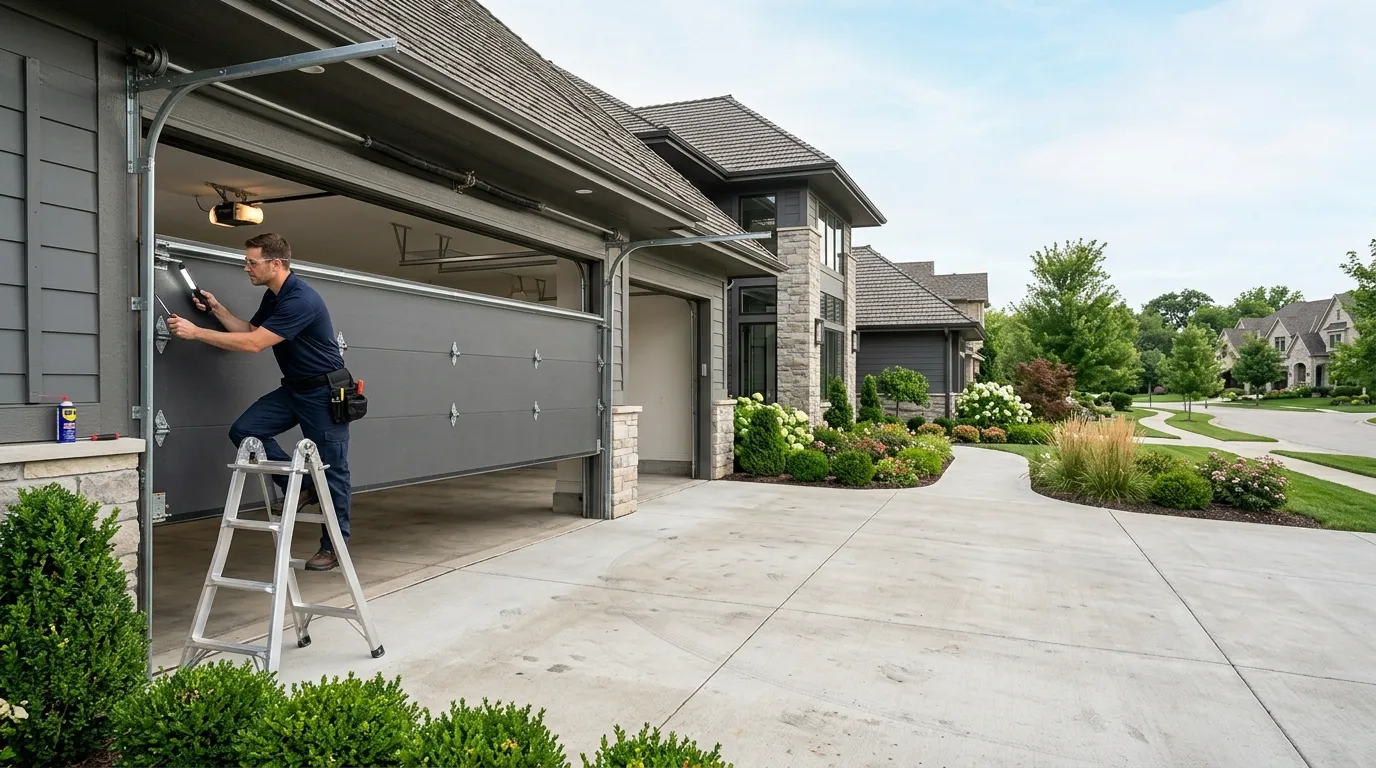
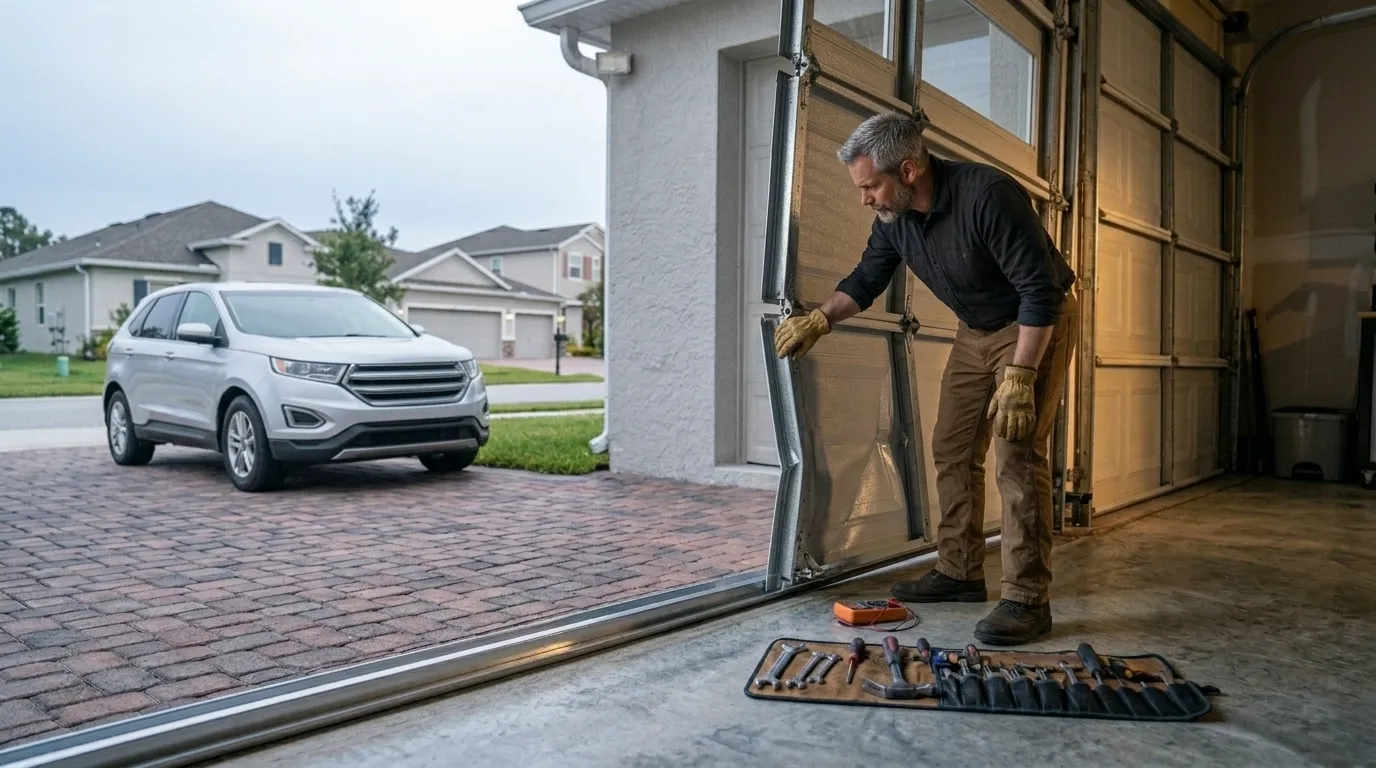
On a two-spring double door, it's common for one spring to go first and the other to follow within a season, since they've logged the same open-close cycles side by side for years. If your opener starts straining, reversing partway up, or the door sags visibly on one side when it's down, that's a spring losing tension, not a track or opener problem, even though owners often call about the opener first.
What the Repair Takes
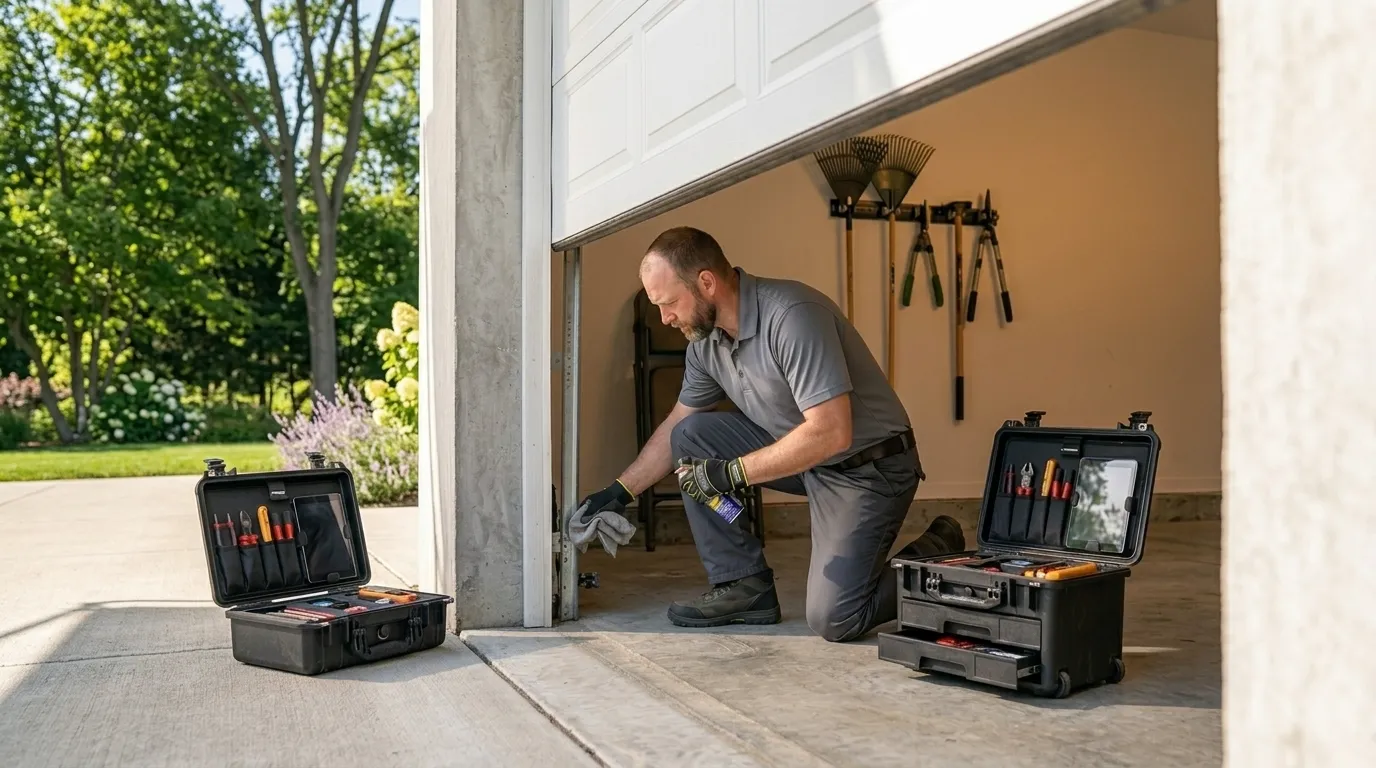
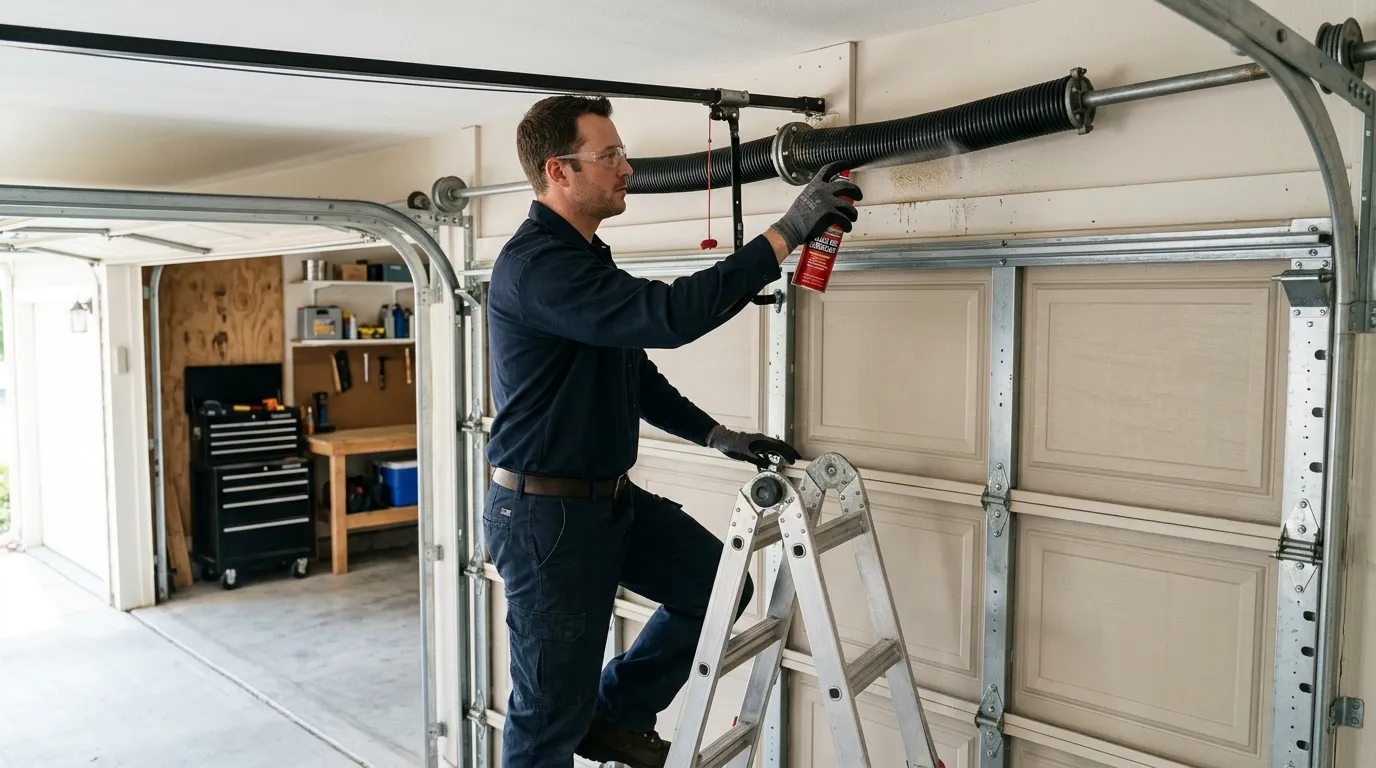
A torsion spring swap on a standard two-car door is a controlled job: unwind the old spring under tension, pull the shaft if the bearings or drums are shot, wind the new spring to the correct number of quarter-turns for that door weight, and balance-test it so the door holds still at waist height under hand lift. On a door of this era we're also checking the center bearing plate and the cable drums, since 40-plus years of use wears those alongside the spring even if nobody notices until the spring goes.
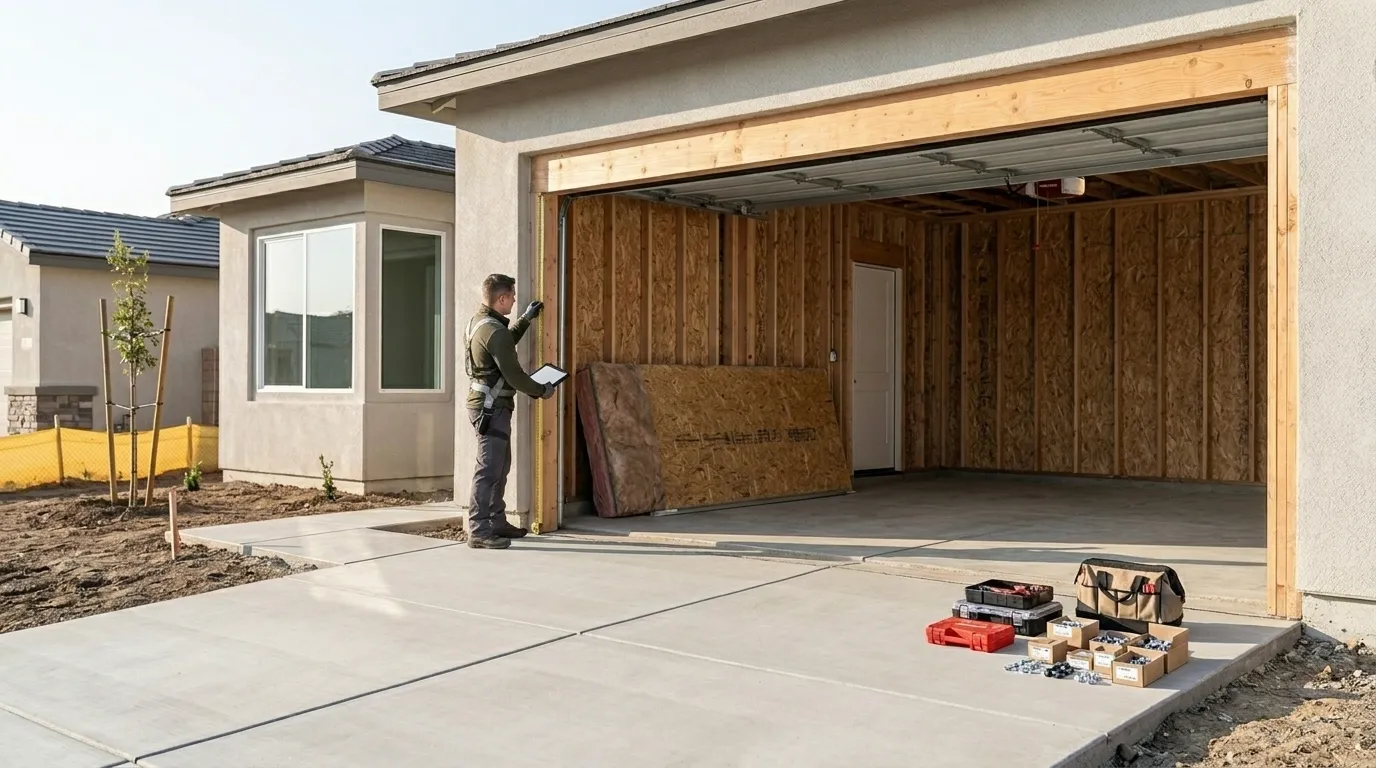
What can slow a job down isn't the labor - it's parts. If your door takes a spring size or a drum that isn't a common stock item, that piece has to be ordered in, and we'll tell you that up front rather than promise a same-visit fix we can't back up.
The DIY Question
A wound torsion spring holds enough stored force to break a wrist or worse, and that doesn't change because the house is in Deerfield Beach instead of somewhere colder or newer. The winding bars, the correct number of turns for a 16-by-7 steel door, and a way to hold the shaft steady while you work are not optional equipment - they're the difference between a repair and an ER visit.
Where a homeowner can safely help: cleaning the tracks, checking that the door is actually balanced by disconnecting the opener and lifting by hand, and noting which side is heavier before calling. That saves time on the visit. Winding or unwinding the spring itself isn't a job to learn on your own door.