What You Pay
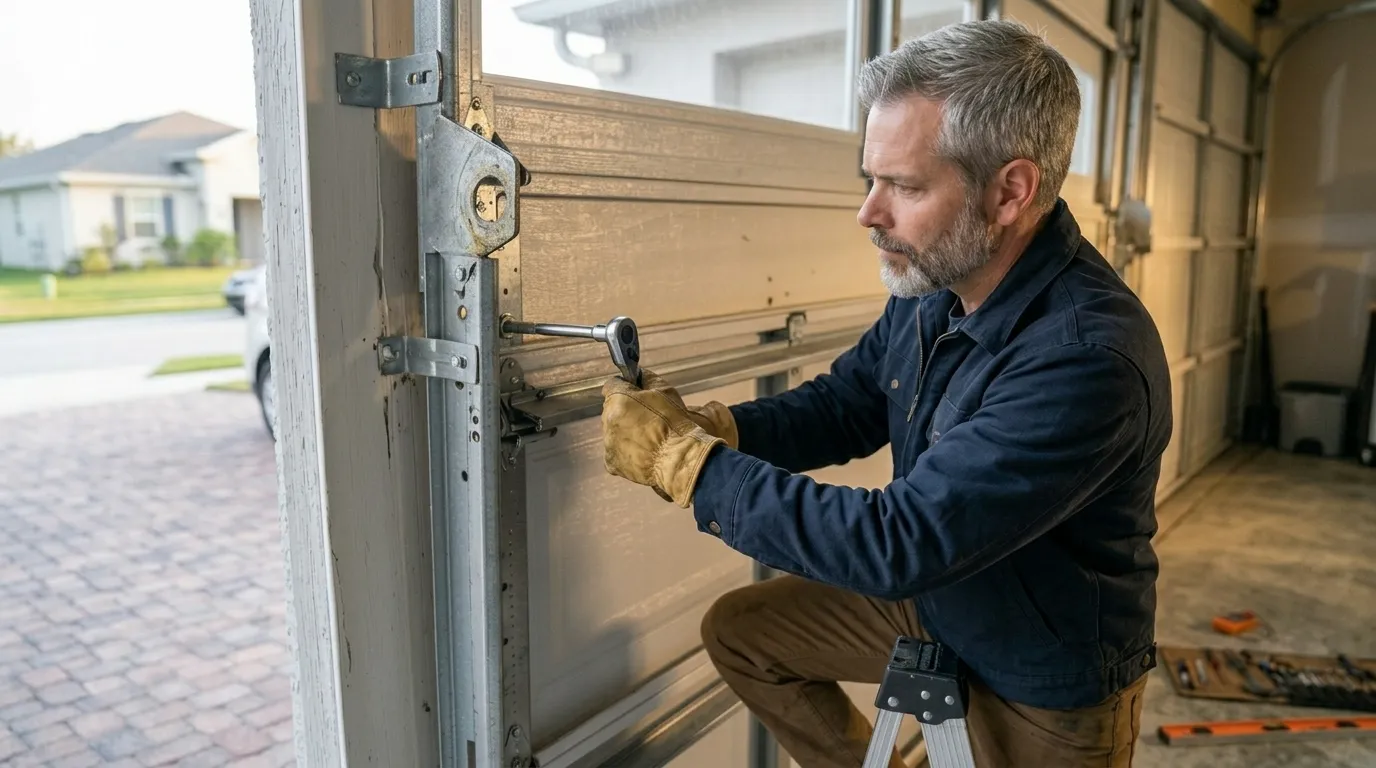
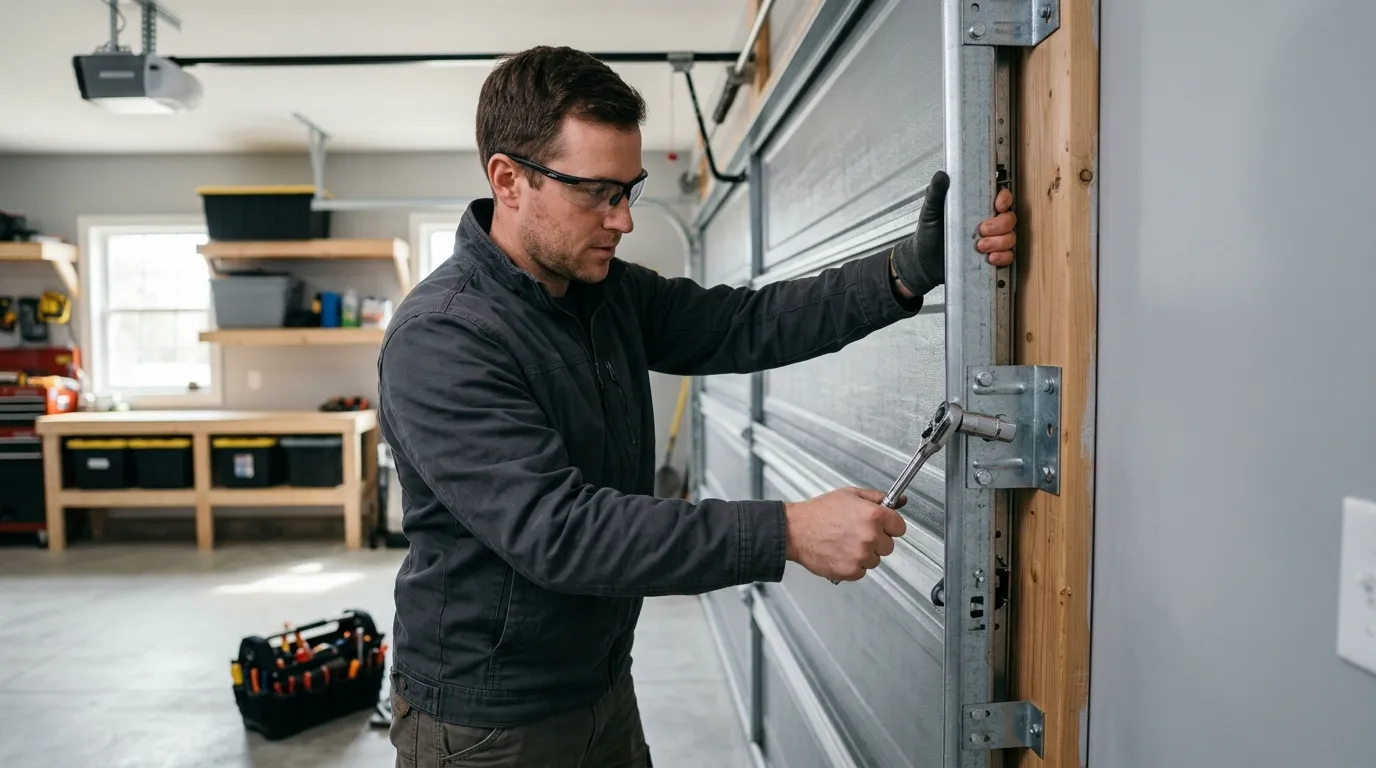
There's no single number for this job, and we won't pretend there is. A door that's simply jumped a roller out of the track is a different job than one where the track itself is bent, or where a cable snapped and dragged the panel sideways as it came down. Some off-track calls are a twenty-minute fix - reseat the rollers, true up the track, check the hardware, done. Others mean pulling and replacing a section of track, or discovering that the spring that was supposed to hold the door's weight let go first and that's what pulled it off the rails.
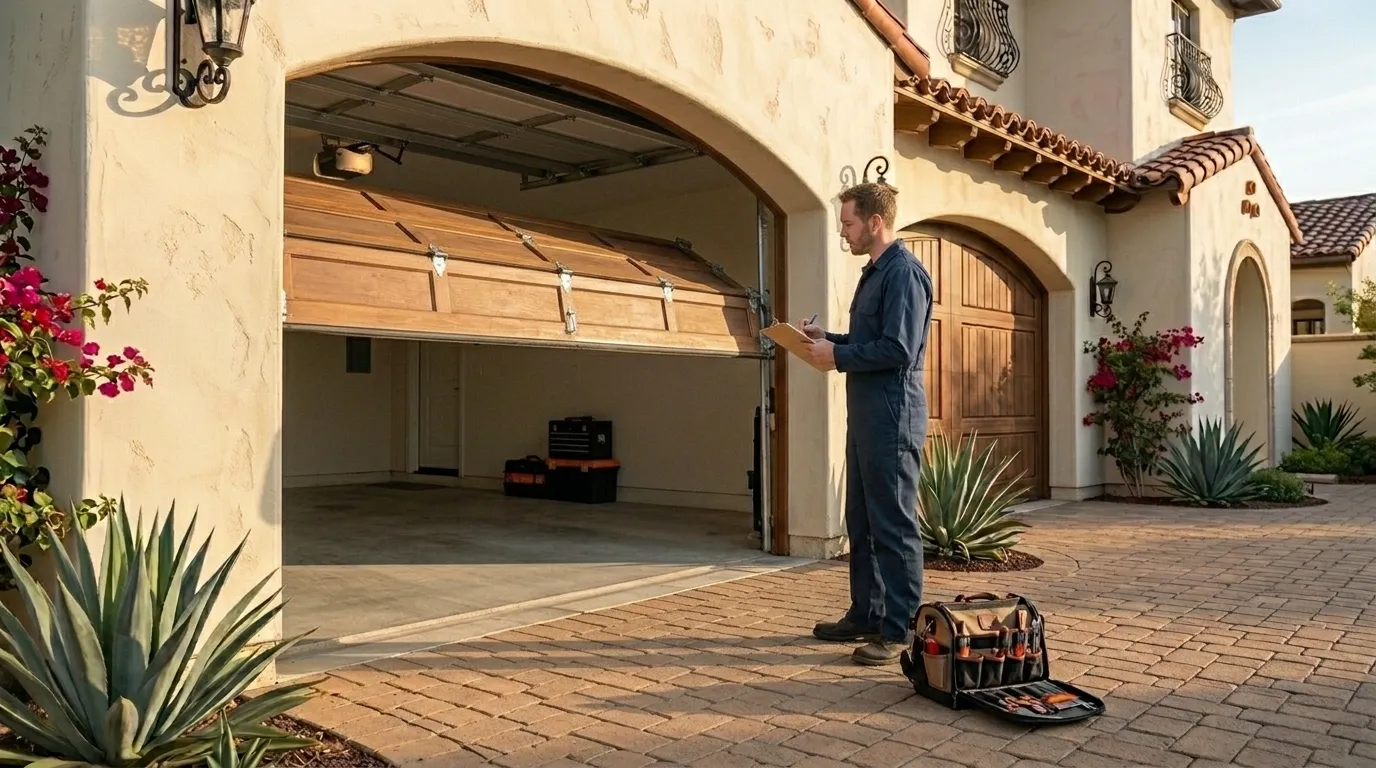
We look at the door before we quote anything, because guessing over the phone does nobody any favors. If the track is only bent in one spot, straightening it is usually cheaper than replacing it. If it's bent in multiple places, or the door has come off far enough to warp a panel, replacement of that section is the honest call even though it costs more up front - a track that's been bent and re-bent doesn't hold alignment long. That's the one limitation worth saying out loud: we'd rather tell you a repair won't last than sell you one that won't.
Why This Fails Locally
Across the service area, most houses went up between 1953 and 2005, with the bulk of that stock - the 1960s and '70s builds that make up most of the 32 named communities we cover - carrying garage door hardware that's original or close to it. Track brackets on houses from that era were fastened to jamb framing that's now decades older than the door hanging on it, and lag screws loosen in wood that's shrunk and settled over fifty-plus years. A door that's slightly out of plumb on hardware like that doesn't take much to jump the track - a slightly imbalanced spring, a roller that's finally worn through, or just someone backing a car into it at an angle.
The mild temperate climate here doesn't help in the way people expect. There's no frost heave to worry about, but the humidity and salt-carrying air common to this part of Florida corrode roller stems, track bolts, and cable ends steadily over the years, even without visible rust on the surface. A track that looks fine can still have hardware underneath that's lost its grip. That combination - old fasteners, corroded hardware, and a door that was never rebalanced - is why off-track calls are as common as they are here.
How It Shows Up
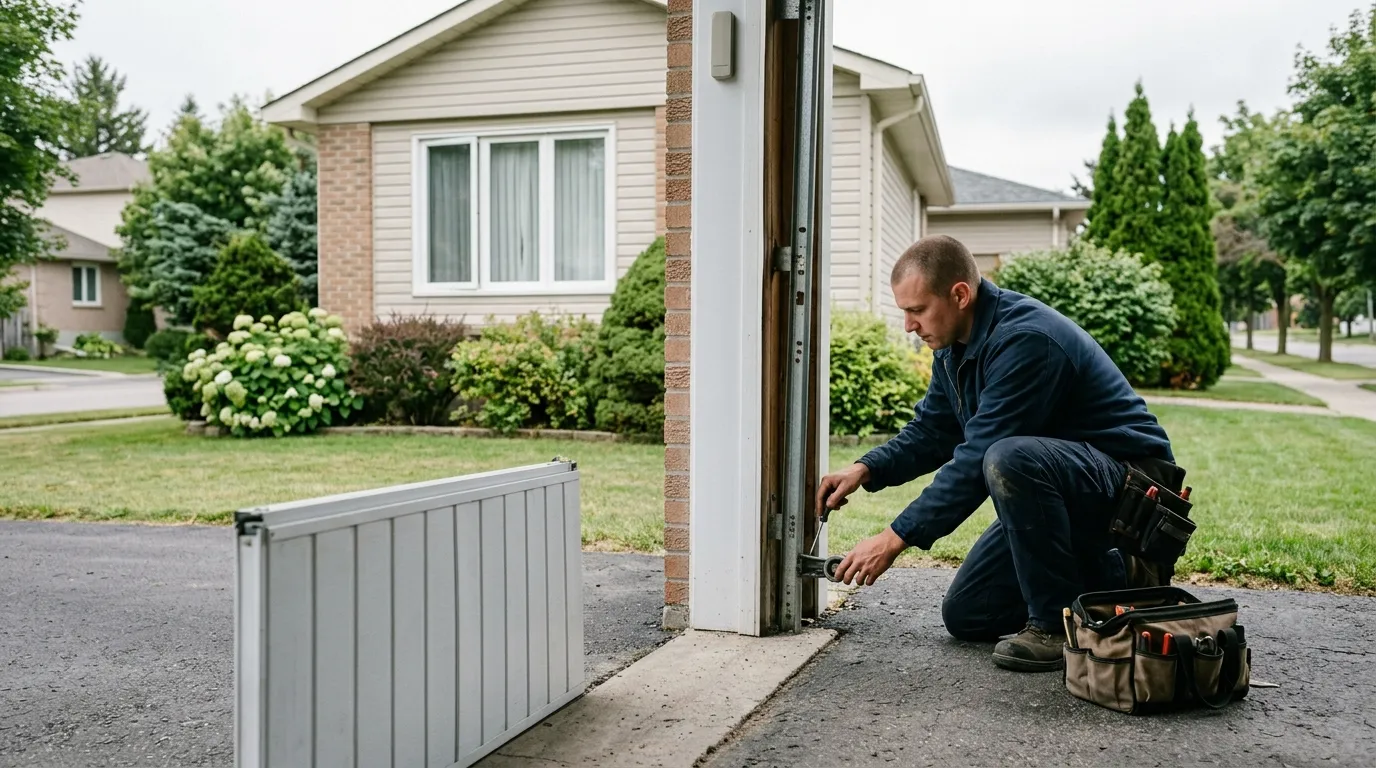
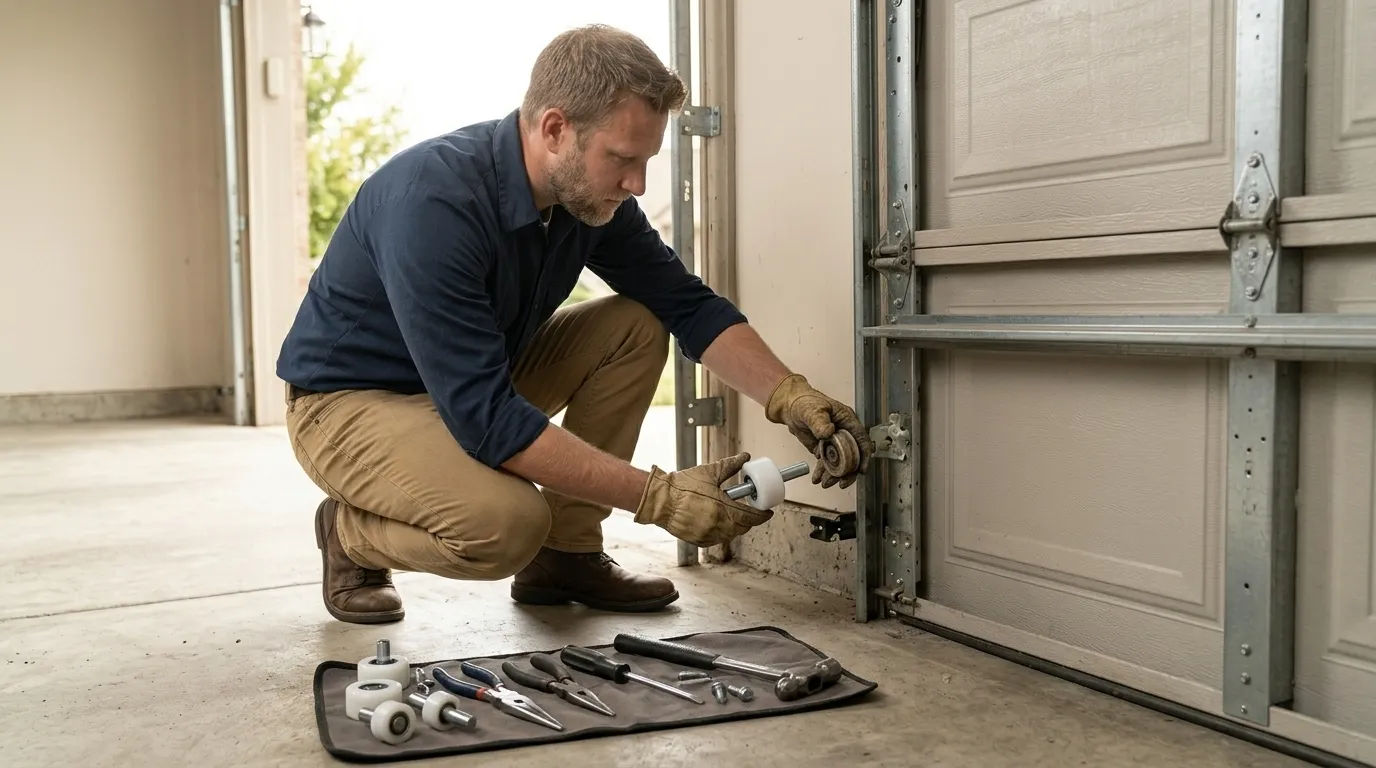
Most off-track doors don't come off all at once - they show warning signs first, if you know to look for them. A roller riding visibly outside the track, a gap between the bottom panel and the floor on one side but not the other, or a door that runs crooked as it opens are all signs the door is fighting its track before it fully leaves it. A grinding or scraping sound near the top of the travel, different from the usual opener hum, often means a roller has already started climbing out of the channel.
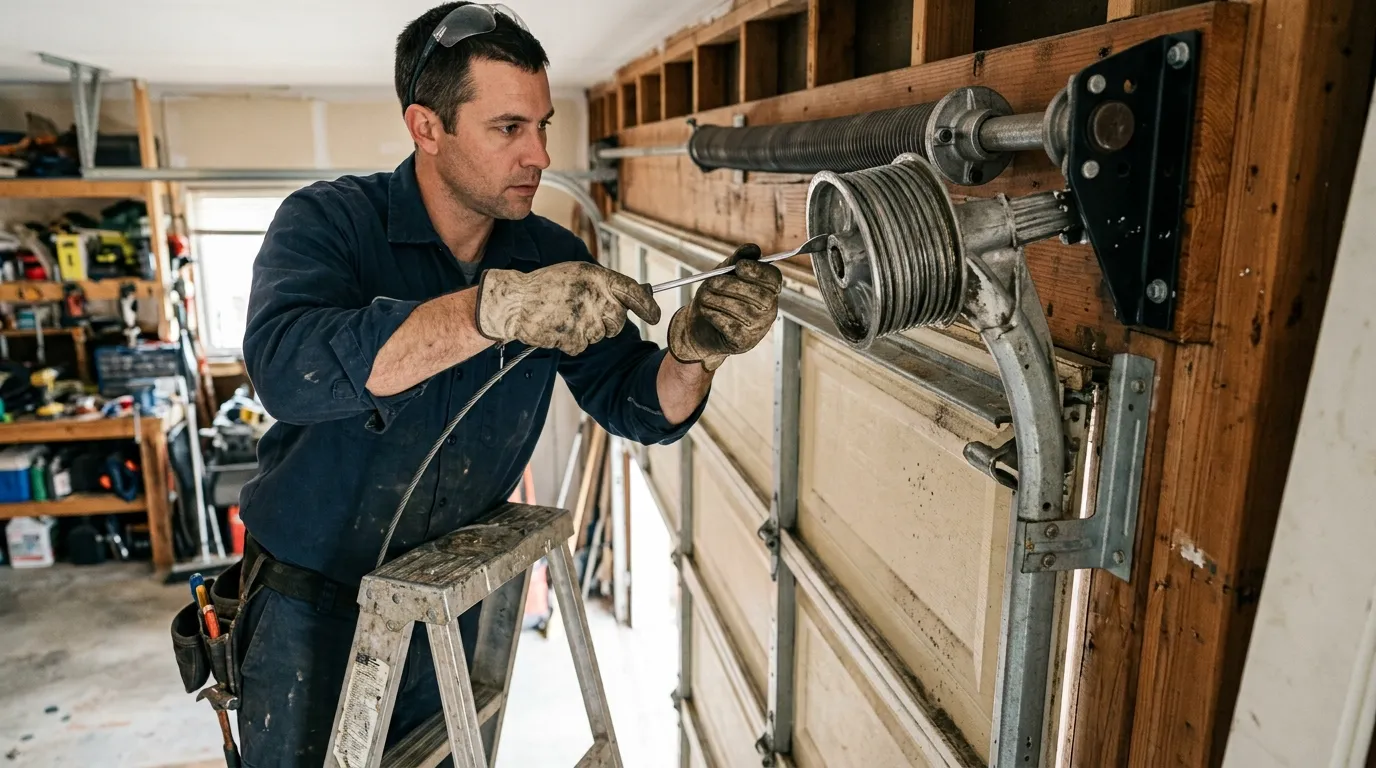
Sometimes it's sudden: the door slams down at an angle, stops halfway with one corner low, or simply won't move because a cable has come loose and jammed against the drum. In houses on original 1960s or '70s track hardware, a bent section from years of minor misalignment is often the real cause even when the immediate trigger looks like something else - a car bumper, a gust through an open door, a spring finally giving out. If your door is off track and you're not sure why, that's exactly what we come out to find, not just fix the symptom.