How It Shows Up
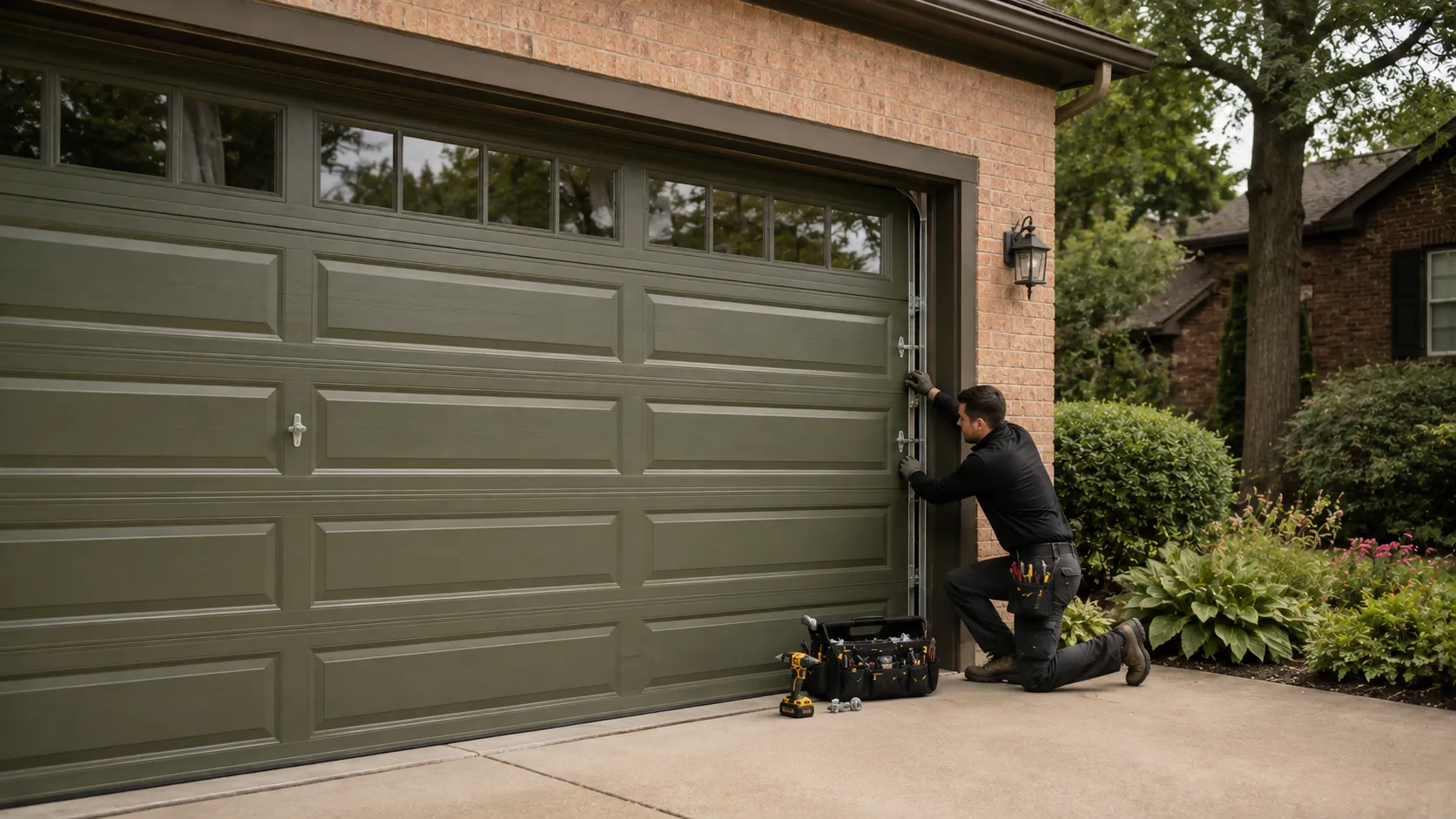
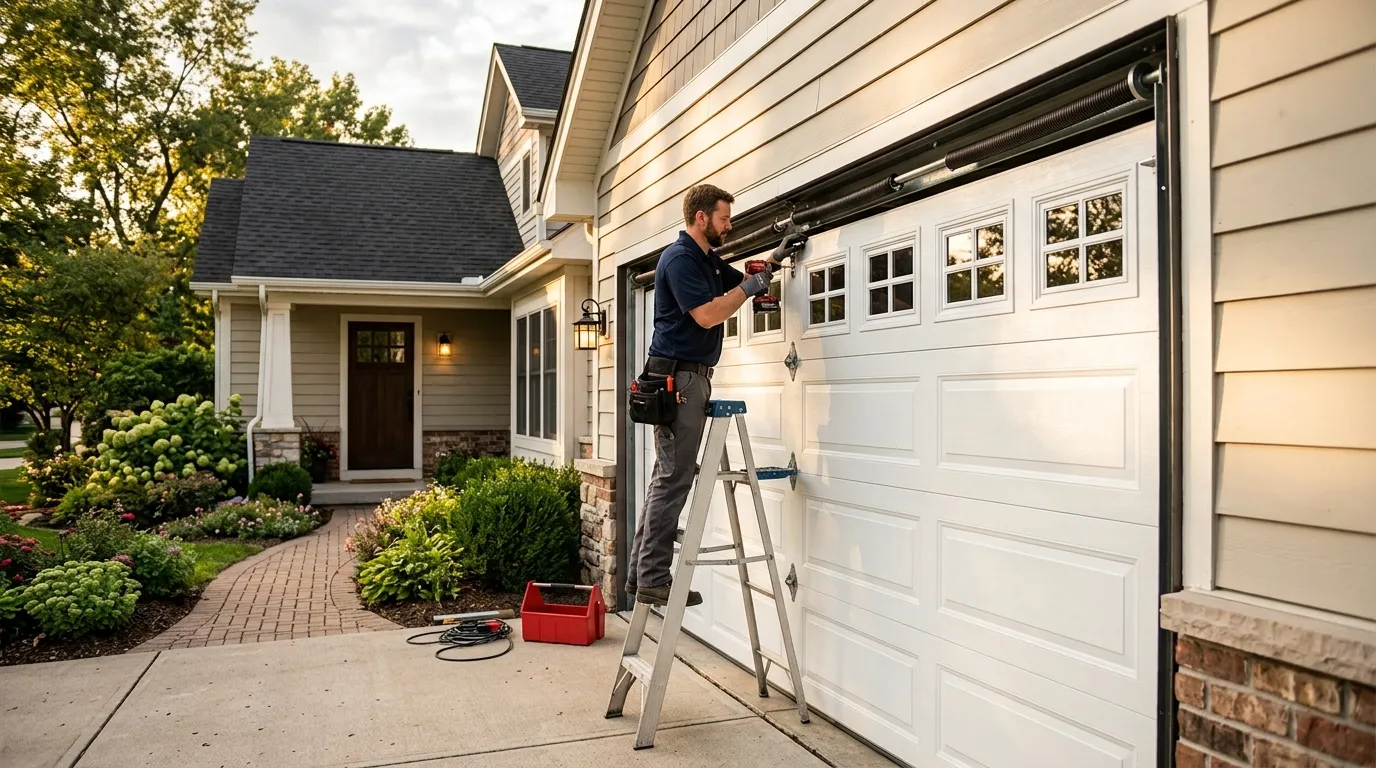
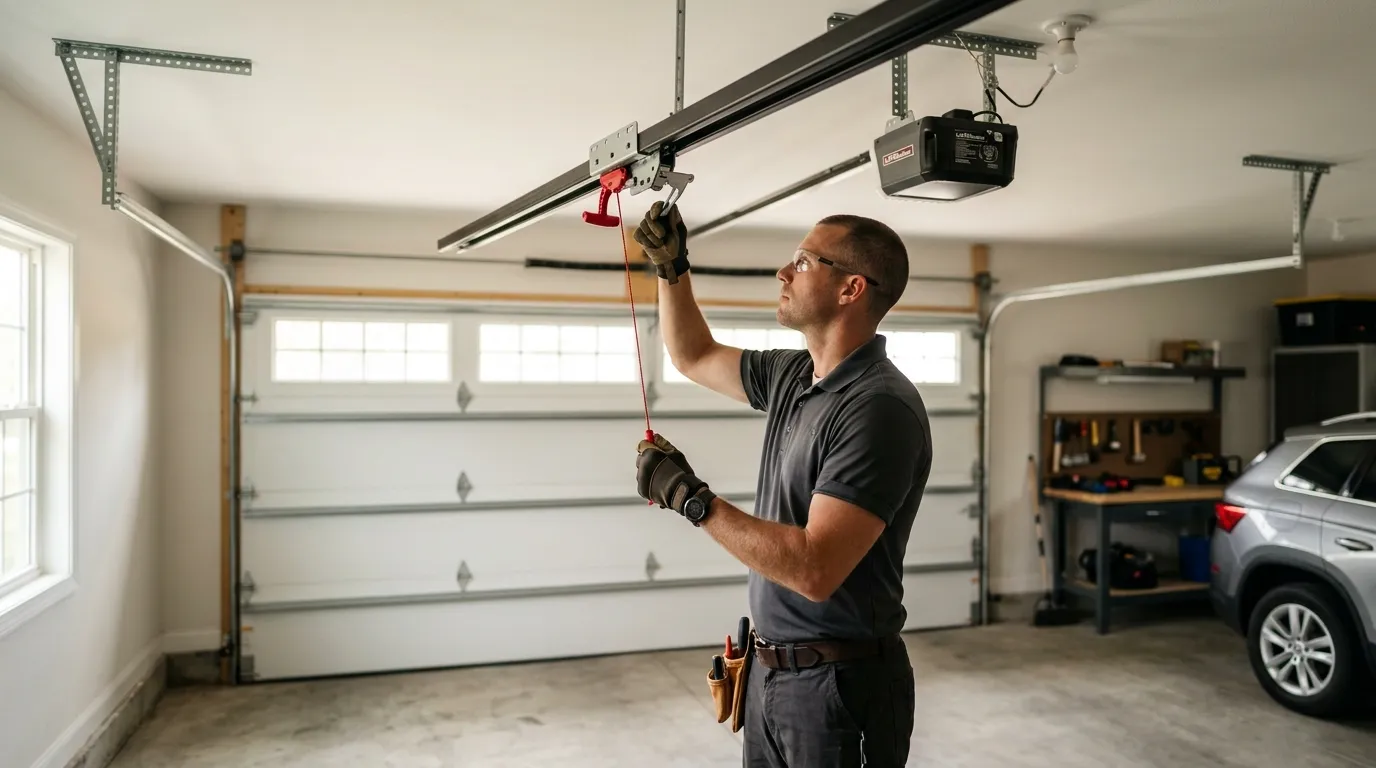
Washington Park sits about two miles from Fort Lauderdale, and most of the houses here went up around 1970 - squarely inside the 1953-2005 build window that covers this whole service area, but on the older end of it. That matters because a lot of the garage door hardware on those houses has never been swapped out. When a spring finally lets go on a door that's been on the same torsion bar since the Nixon administration, it doesn't go quietly. You'll hear a bang, the door won't budge past knee height, or it drops fast on one side because a cable let go on original-era hardware that was never rated for today's heavier insulated panels. Openers in this pocket are often a second or third replacement bolted onto original track and hinges, which is its own kind of mismatch - a modern chain drive fighting rollers and hinges that are fifty years old. We see doors here that still have their factory paint under newer coats, which tells you the panel is original even if someone repainted it twice since.
What the Repair Takes
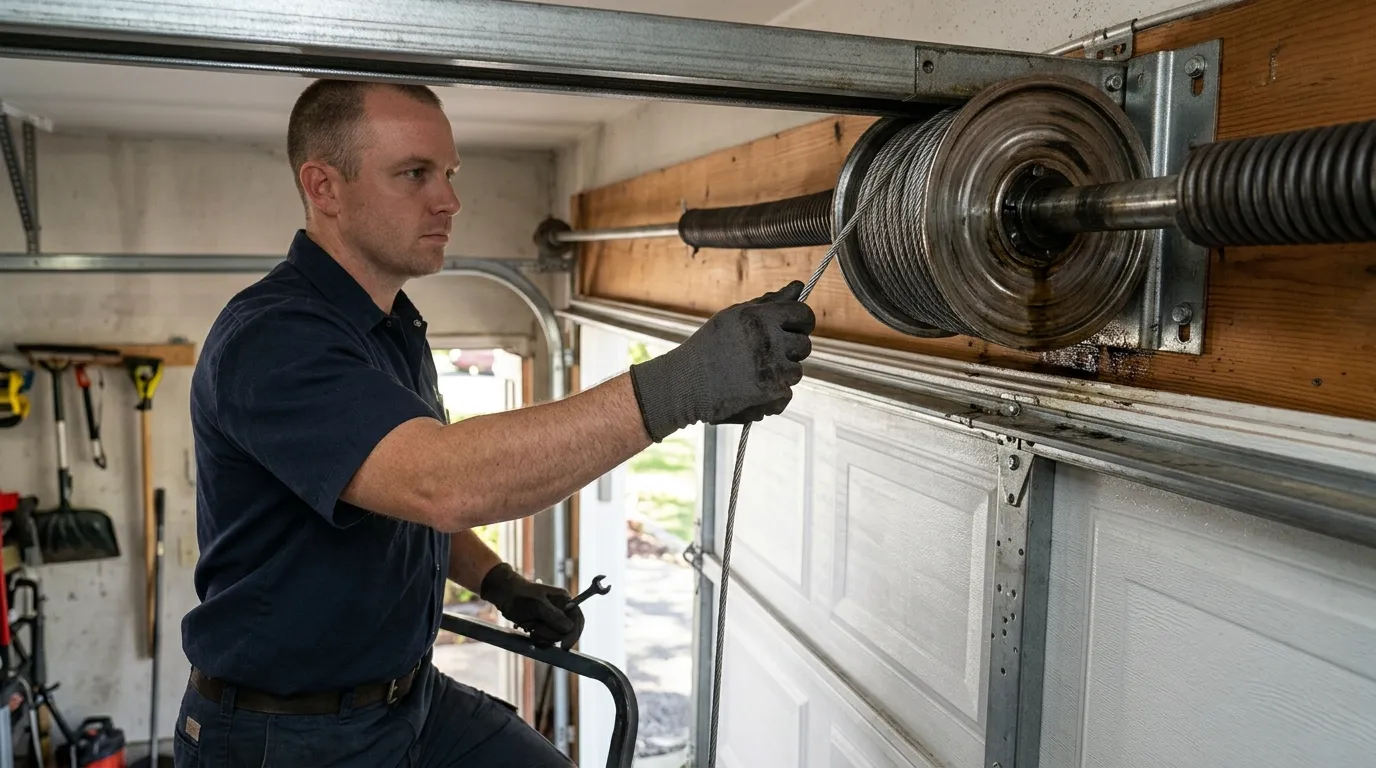
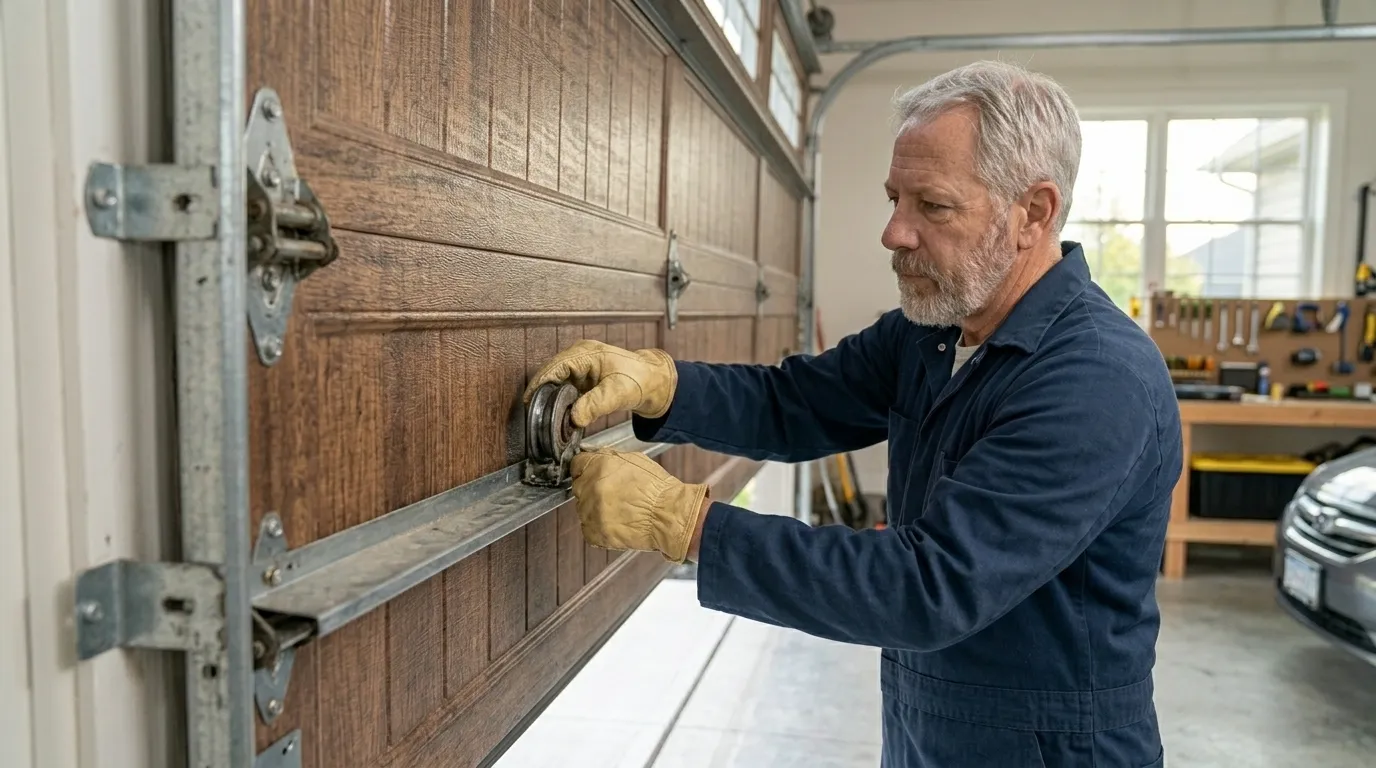
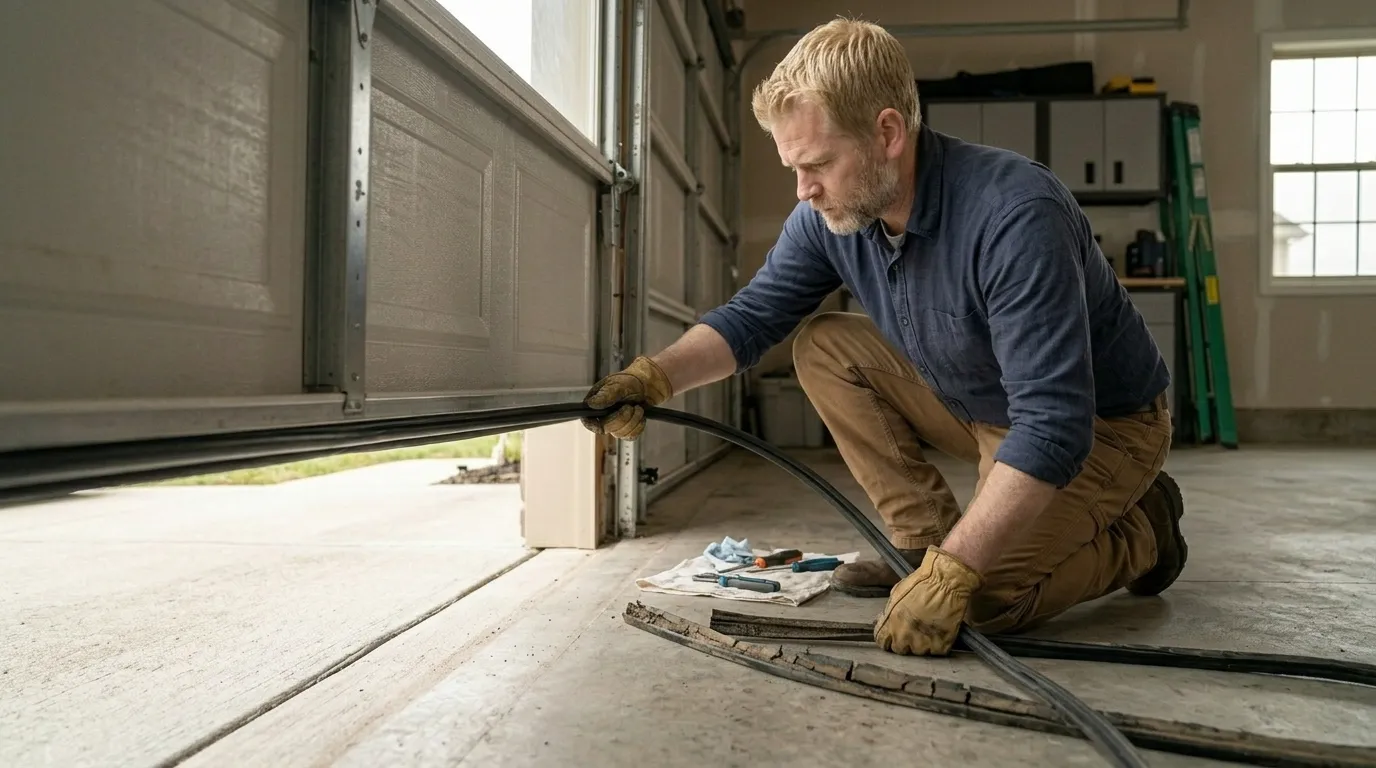
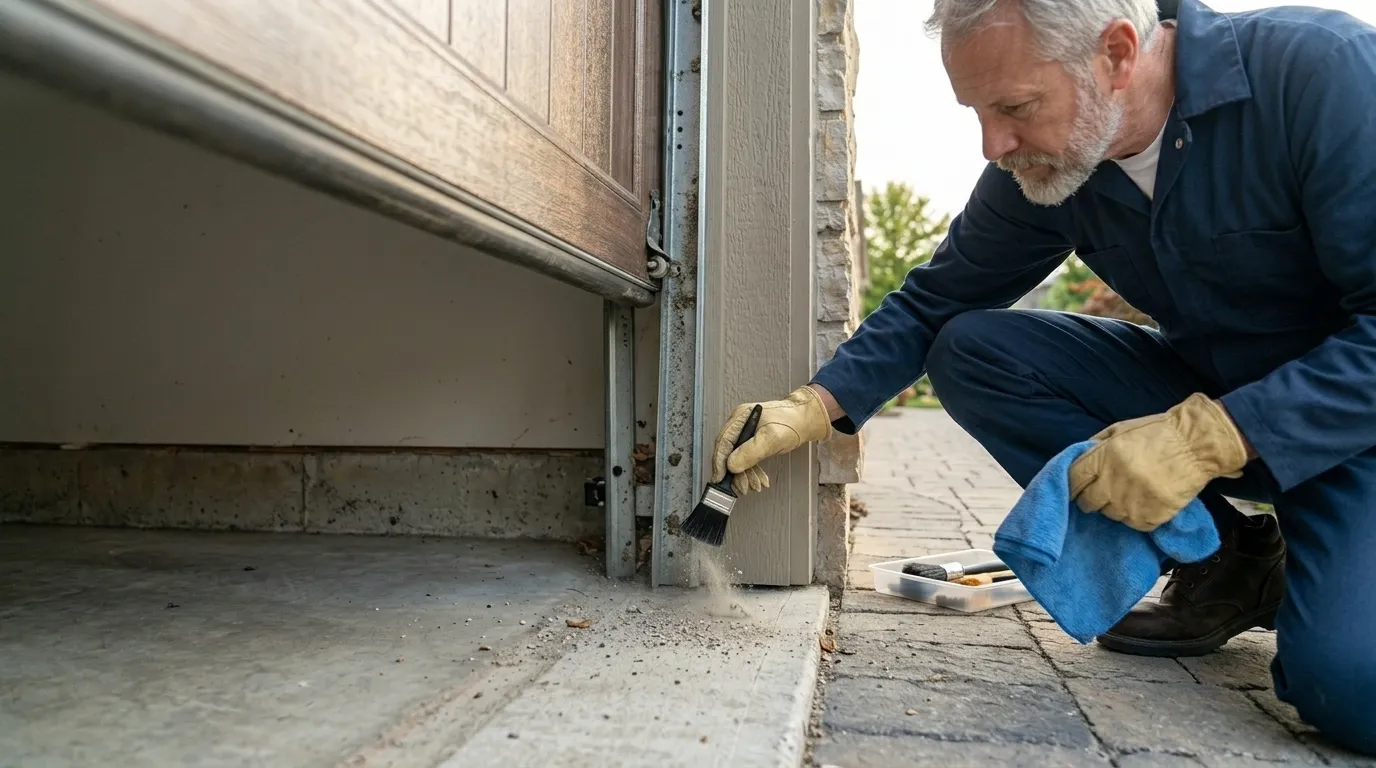
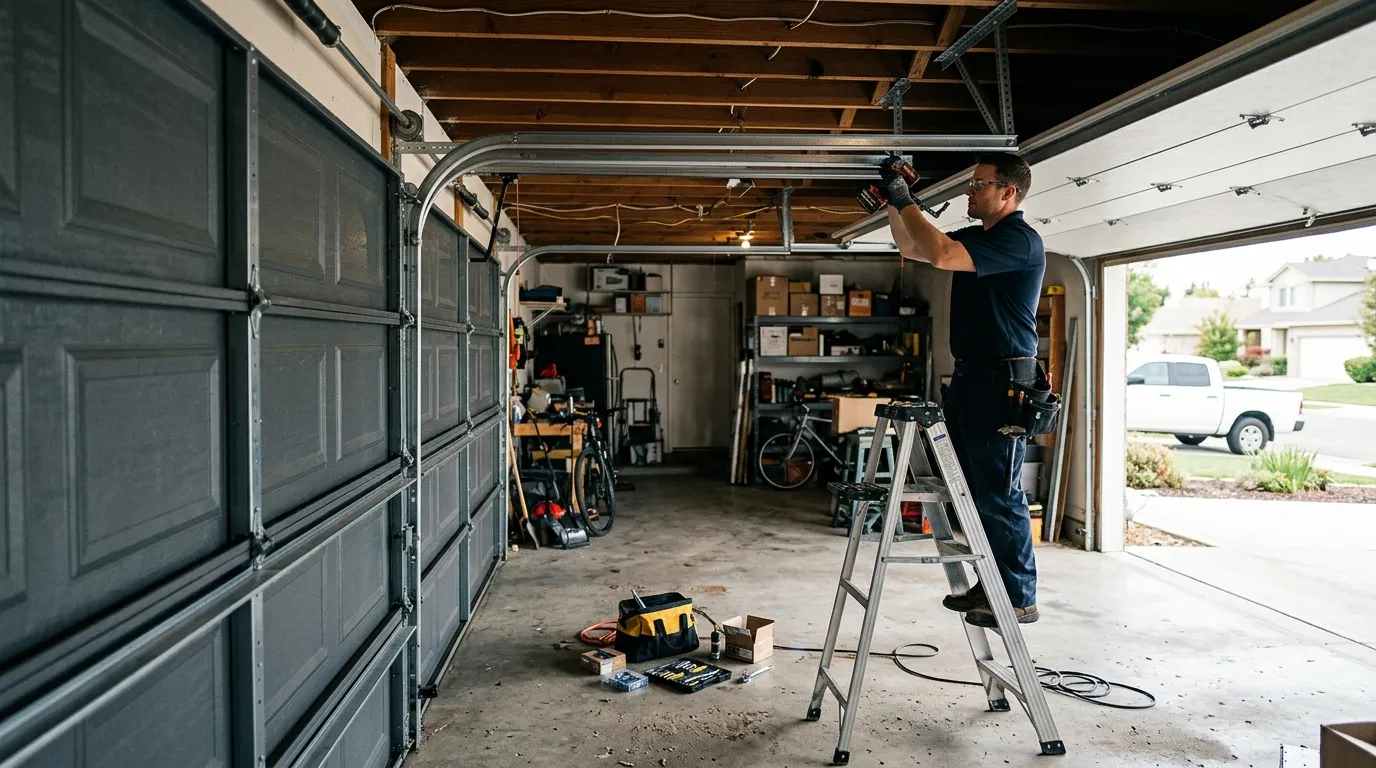
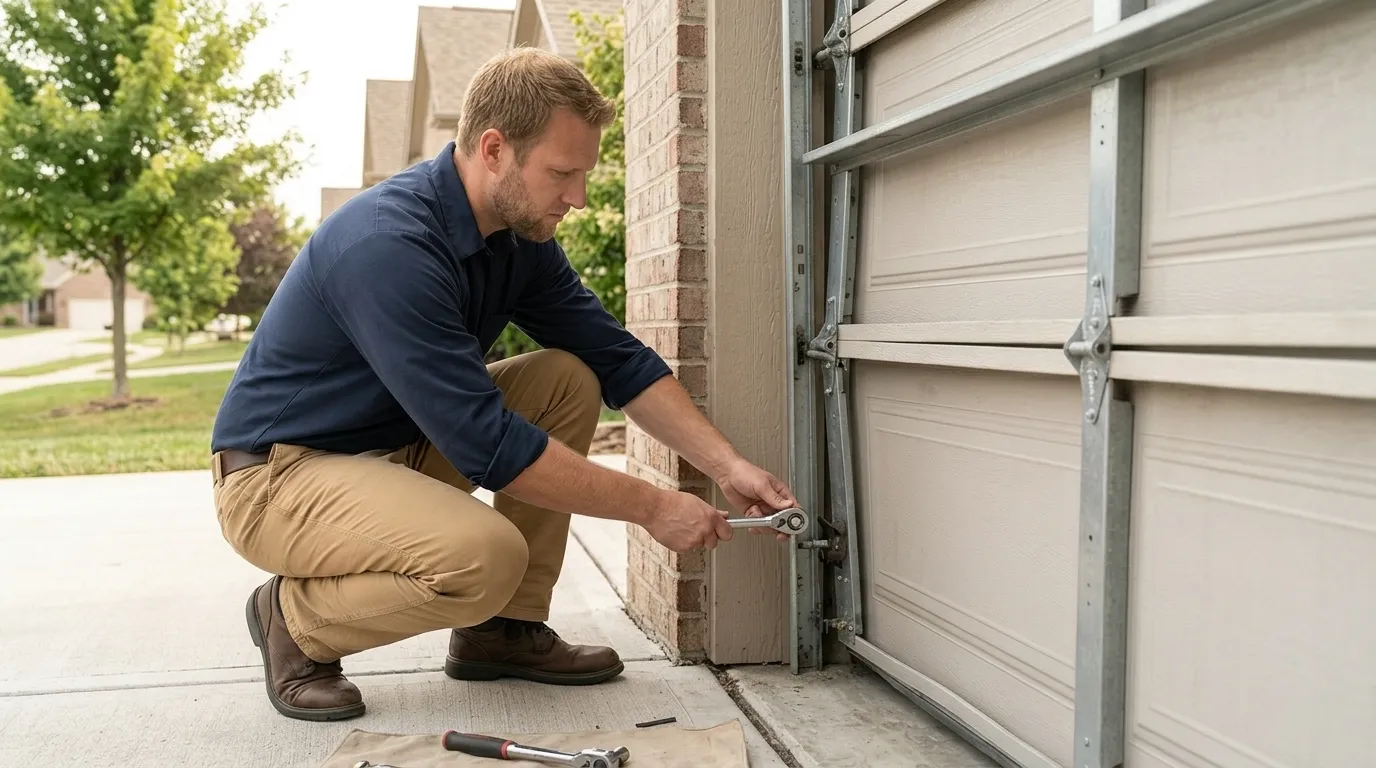
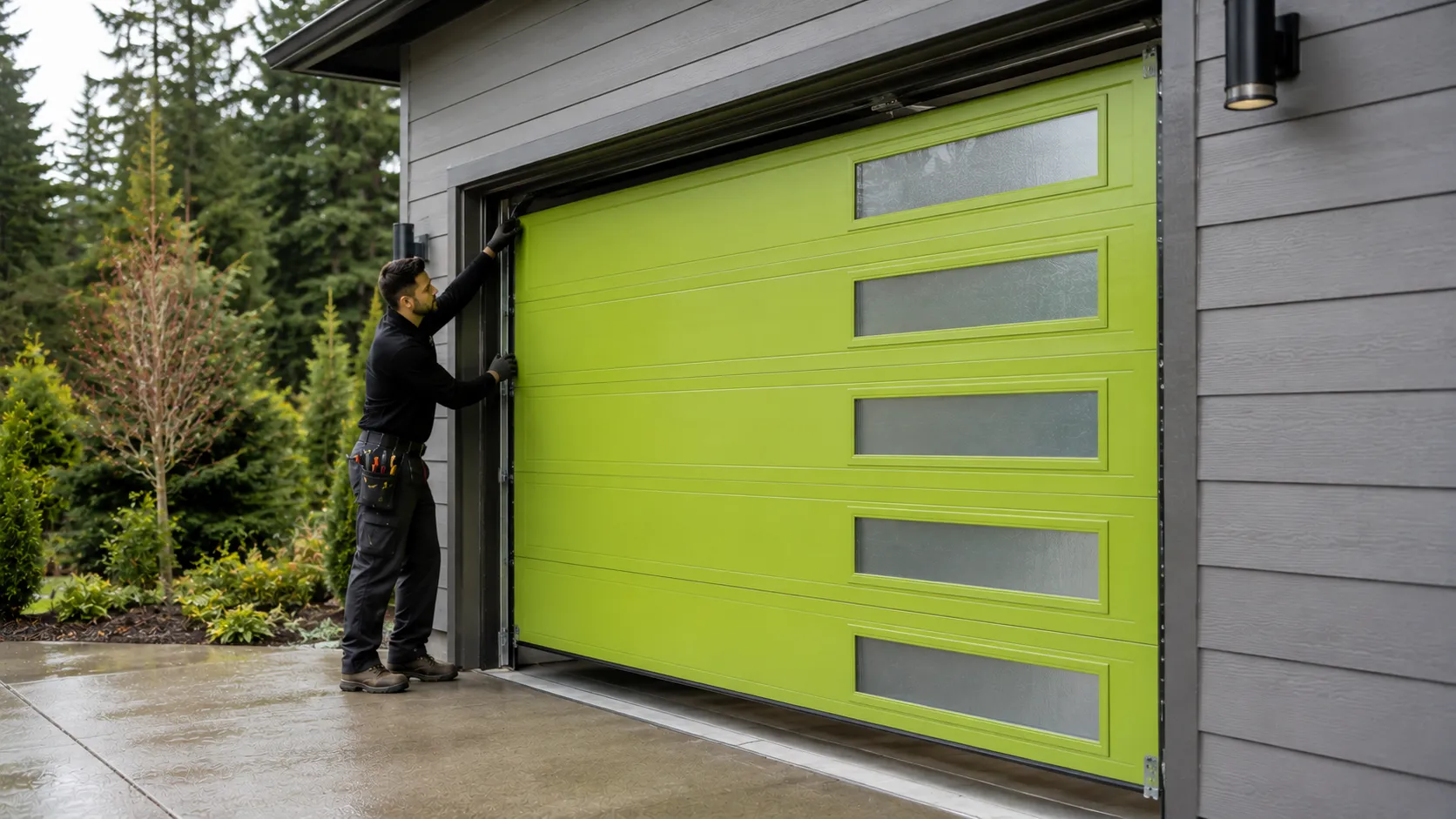
On a house built around 1970, the first question isn't what's broken, it's what else on that door has never been touched. If the spring is original, the cables, drums, and center bearing plate usually are too, and replacing one without checking the rest just means a second call. We pull the door off its stops, check the torsion bar for wear grooves, and look at the track brackets, because fifty-year-old lag bolts in old jamb wood don't always hold a new spring's tension the way they held the old one. Track alignment on original hardware is often off by enough that a new opener won't fix a door that's binding - the track has to come first. If the panel itself is original steel, we'll tell you honestly whether it's worth reinforcing or whether the door's earned retirement. We don't sell a full replacement on a door that just needs a spring and a tune, and we won't push a spring-only fix on a door where the drums are already cracked.
What You Pay
We don't have a published price list for this page, and we're not going to invent one. What we can tell you is that the job on a Washington Park house usually starts with diagnosing how much of the original 1970-era hardware is still in play, because that's what drives whether you're looking at a spring swap or a fuller hardware refresh. A door where only the spring has ever been replaced costs less to fix right than one where the drums, cables, and track brackets are all original and all showing the same wear. We quote after we've had eyes on the door, not before, because guessing on a house this age is how you end up back out here in six months for the part that wasn't checked the first time.